
Envelope Budgeting in a Digital World
The classic cash envelope method adapted for families who pay bills online. Explore the trade-offs of physical versus digital versions of this approach.
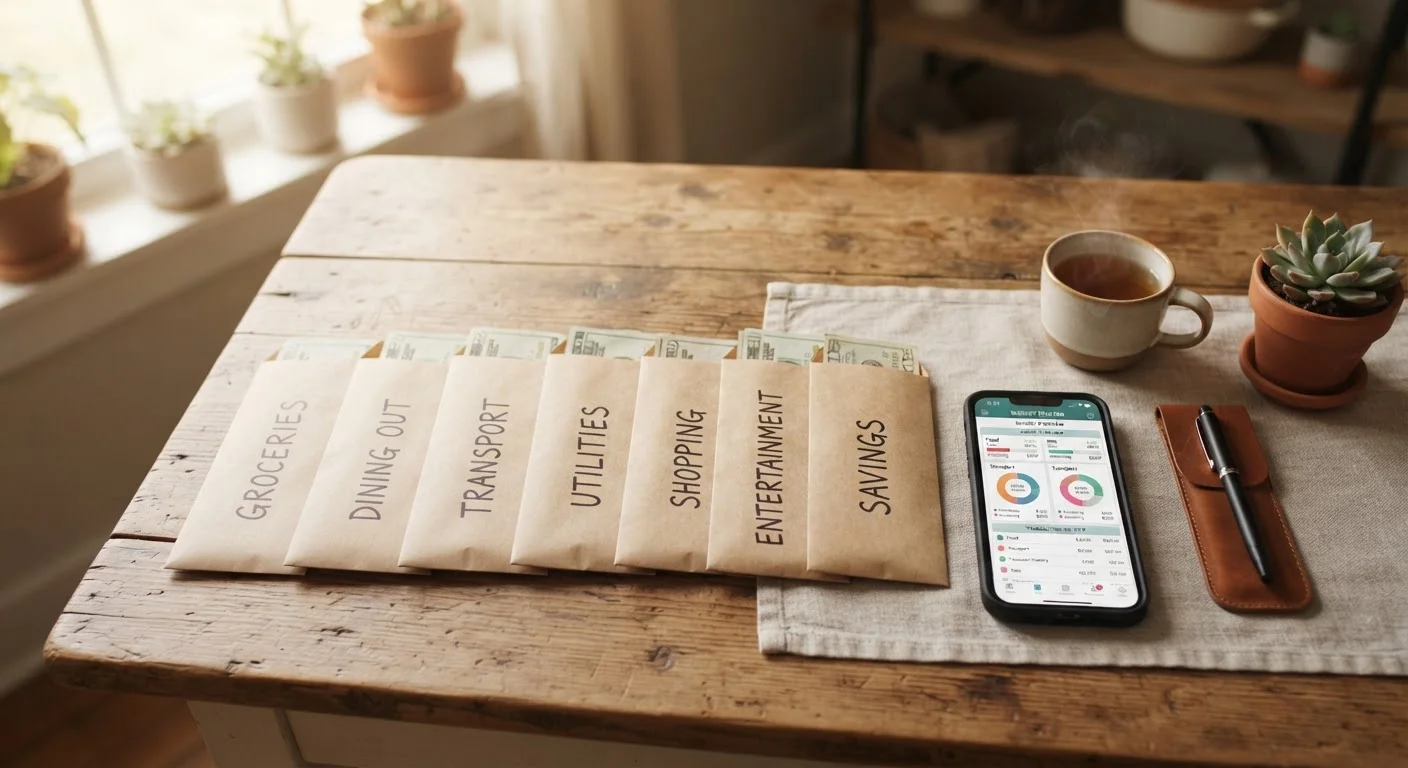
Photo: appropriateanswers.com editorial
—— In This Article
Key Takeaways
- Envelope budgeting assigns every dollar to a spending category before the month begins.
- Physical cash envelopes work well for categories where overspending is a recurring problem.
- Digital envelope apps replicate the method without requiring cash withdrawals.
- Neither version eliminates the need for a solid underlying spending plan.
- Combining physical and digital envelopes is a practical middle path for families who pay bills online.
Spending limits are concrete and immediately visible
An empty envelope is an unambiguous signal to stop spending. This removes the need to mentally track a running total across multiple transactions.
Reduces impulse spending in high-risk categories
Research in consumer behavior consistently finds that cash payments reduce transaction amounts compared to card payments, because the physical exchange of money registers as a more significant loss.
No complex setup or software required
The physical version needs only envelopes, a pen, and cash. Families with no prior budgeting experience can start the same day they decide to try it.
Works alongside other budgeting methods
Envelope allocations can be derived from a zero-based budget or a percentage-based plan, so the method does not require abandoning any existing framework a family already uses.
Cash-only approach conflicts with online payments
Mortgage or rent, utility autopay, streaming subscriptions, and most insurance premiums cannot be paid in cash, so a pure envelope system leaves a significant portion of household spending unaddressed.
Carrying and managing cash is logistically awkward
Withdrawing specific amounts by category each pay period takes time, and splitting a grocery run across two envelopes (say, groceries and household supplies) requires on-the-spot math at checkout.
Lost or stolen cash has no protection
Unlike a debit or credit card, cash in a physical envelope cannot be frozen, disputed, or replaced. Losing a fully loaded set of envelopes is a hard financial loss.
Digital versions require consistent manual logging
Without the friction of spending physical cash, a digital envelope system depends entirely on the habit of logging every transaction promptly. Gaps in logging can give a false sense of remaining budget.
What envelope budgeting actually is
Envelope budgeting is a cash-allocation method: at the start of each pay period, you divide your available income into categories and place the cash for each category into a labeled envelope. Groceries, gas, clothing, entertainment, and similar discretionary items each get their own envelope. When an envelope is empty, spending in that category stops until the next pay period.
The method predates spreadsheets by decades, but its logic holds because it makes limits physical and immediate. There is no mental math required to know whether you can afford a restaurant dinner; you open the envelope and count what is left. For families starting out with budgeting, that simplicity has genuine value. See the plain-English guide to family budgets for the foundational concepts that make any envelope system work.
The modern challenge is that most American households pay the majority of their bills electronically. Rent, utilities, insurance, and subscriptions rarely accept cash. So the pure cash envelope method applies cleanly only to the discretionary slice of a budget, which is where most overspending happens anyway.
Pros and cons of the physical cash envelope method
Spending limits are concrete and immediately visible
An empty envelope is an unambiguous signal to stop spending. This removes the need to mentally track a running total across multiple transactions.
Reduces impulse spending in high-risk categories
Research in consumer behavior consistently finds that cash payments reduce transaction amounts compared to card payments, because the physical exchange of money registers as a more significant loss.
No complex setup or software required
The physical version needs only envelopes, a pen, and cash. Families with no prior budgeting experience can start the same day they decide to try it.
Works alongside other budgeting methods
Envelope allocations can be derived from a zero-based budget or a percentage-based plan, so the method does not require abandoning any existing framework a family already uses.
Cash-only approach conflicts with online payments
Mortgage or rent, utility autopay, streaming subscriptions, and most insurance premiums cannot be paid in cash, so a pure envelope system leaves a significant portion of household spending unaddressed.
Carrying and managing cash is logistically awkward
Withdrawing specific amounts by category each pay period takes time, and splitting a grocery run across two envelopes (say, groceries and household supplies) requires on-the-spot math at checkout.
Lost or stolen cash has no protection
Unlike a debit or credit card, cash in a physical envelope cannot be frozen, disputed, or replaced. Losing a fully loaded set of envelopes is a hard financial loss.
Digital versions require consistent manual logging
Without the friction of spending physical cash, a digital envelope system depends entirely on the habit of logging every transaction promptly. Gaps in logging can give a false sense of remaining budget.
Physical envelopes create what behavioral economists call a "pain of paying" effect: handing over bills feels more significant than tapping a card, so people tend to spend less per transaction. That friction is the method's main selling point for categories like groceries or dining out.
The downsides are practical. Carrying category-specific cash is inconvenient, and many transactions, including online purchases and recurring bills, cannot be paid in cash at all. Safety is another consideration: losing a wallet with several loaded envelopes is a genuine financial setback with no recourse.
How digital envelope apps work
Digital envelope apps replicate the same allocation logic without physical cash. You assign dollar amounts to virtual categories (envelopes) at the start of the month, then log or automatically sync each transaction to the correct category. The app shows a running balance for each envelope in real time.
This approach handles online bills, debit card purchases, and automatic transfers without any workarounds. It also makes it straightforward to pair envelope budgeting with sinking funds for irregular expenses like car repairs or holiday gifts, since those funds can live as dedicated virtual envelopes that accumulate over several months.
Digital envelopes still need a spending habit
Most digital envelope apps track spending after the fact rather than blocking a transaction at the point of sale. The app can show that your dining-out envelope is empty, but your debit card will still work at a restaurant. Building a habit of checking your envelope balances before spending, not just after, is what gives the digital method its structure. Some families set a phone reminder before typical high-spend moments, like weekend errands, to prompt a quick balance check.
Most digital envelope apps still require manual discipline: the app tracks spending, but it cannot stop you from swiping a card when a virtual envelope is empty the way a literal empty envelope can. Building a habit of checking balances before spending is what makes the digital version effective.
Combining both approaches
Many families find the most workable version is a hybrid: digital envelopes for fixed bills and online purchases, physical cash for the two or three categories where they historically overspend. For example, a family might keep a grocery envelope in cash and a dining-out envelope in cash, while tracking all other categories in an app.
This structure keeps the friction-based benefit where it matters most while avoiding the logistical burden of withdrawing cash for every single category. It also fits naturally alongside other budgeting frameworks. If you are comparing this method to other approaches, a side-by-side look at zero-based budgeting and the 50/30/20 rule can help you understand how envelope budgeting relates to each.
Whatever version a family chooses, the method only works if the underlying category amounts are realistic. Assigning $200 to groceries for a family of five is not a plan; it is a setup for abandonment. Understanding the difference between needs, wants, and savings is necessary before any envelope amounts are set. Once those amounts are grounded in real spending history, consistent monthly review habits described in monthly money habits that keep a family budget on track will reinforce the system over time.
~33%
US transactions still made in cash
According to the Federal Reserve's 2023 Diary of Consumer Payment Choice, cash accounted for roughly 18% of all payments by number, with debit and credit cards covering the majority, illustrating why a purely cash-based envelope system covers only part of family spending.
2 in 3
Americans who say they overspend on discretionary items
Surveys conducted by the American Psychological Association have found that a majority of US adults report spending more than intended on non-essential categories, the exact area where envelope limits are most effective.

Smart Family Finance Editorial Team
Smart Family Finance Editorial Team is the collective byline for our editorial team and contributor network. Articles published under this byline or an editorial pen name are researched, written, and reviewed according to our editorial standards for clarity, consistency, and independence before publication.
View author profile