
Tire Rotation, Balancing, and Alignment: What Each Service Actually Does
Three services, three different purposes. Understand what each one corrects so you never pay for something your car does not need.
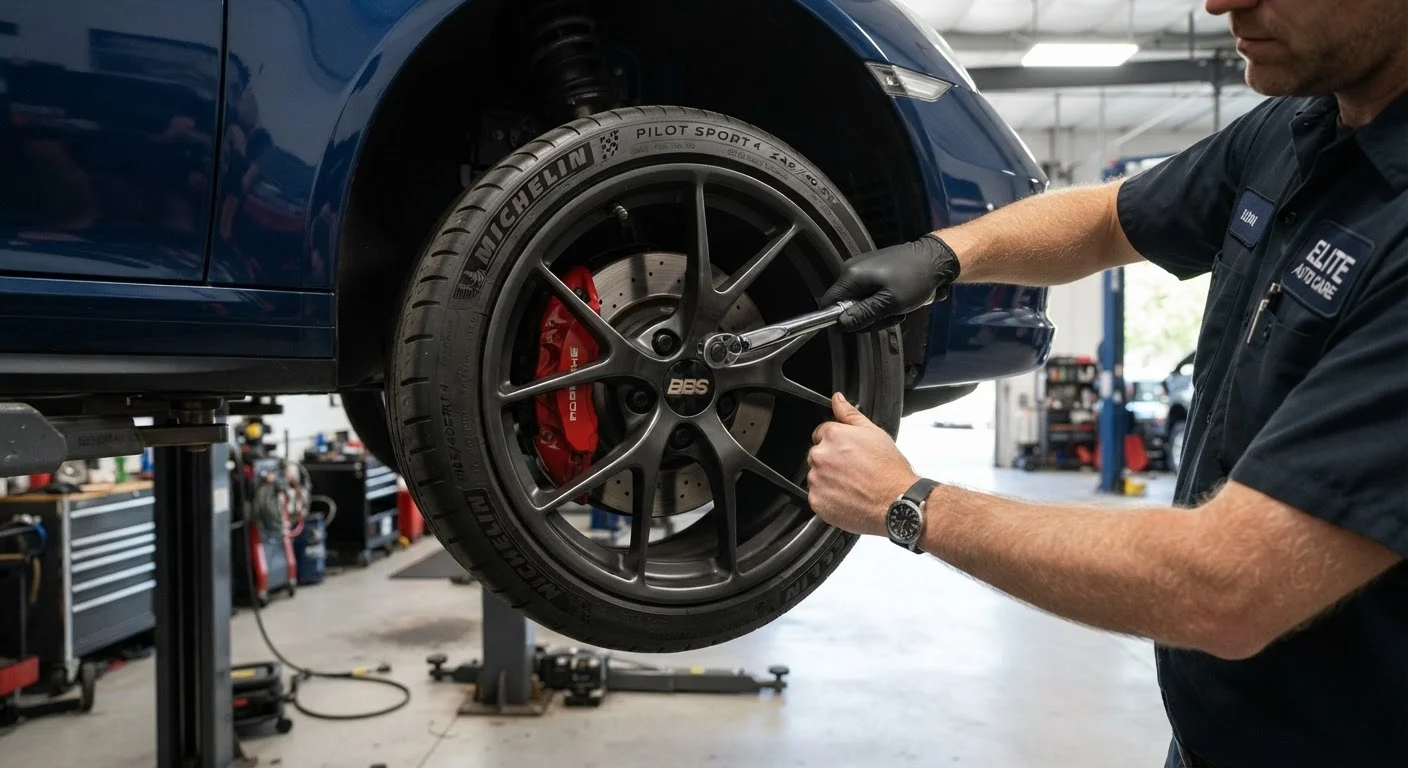
Photo: appropriateanswers.com editorial
—— In This Article
Key Takeaways
- Rotation moves tires to even out tread wear across all four positions.
- Balancing corrects vibration caused by uneven weight distribution in the wheel assembly.
- Alignment adjusts the angles of the wheels so the car tracks straight and tires wear evenly.
- Each service addresses a different problem; one does not substitute for another.
- Skipping rotation or alignment typically shortens tire life and can lead to suspension wear.
What tire rotation actually does
Rotation moves each tire to a different position on the vehicle, typically swapping front to rear and sometimes crossing side to side, depending on whether the tires are directional or the vehicle is all-wheel drive. The reason is straightforward: front tires wear faster on most cars because they handle steering and, on front-wheel-drive vehicles, also transmit engine power. Without rotation, the front pair can lose 50 percent of their tread while the rears still look nearly new.
Most vehicle manufacturers recommend rotating tires every 5,000 to 7,500 miles, and many drivers find it convenient to do this at every other oil change. The cost is low, often $20 to $50 at a shop, and some tire retailers include it free with purchase. Skipping rotations does not cause immediate drama, but it means buying a new set of tires sooner than necessary. See the weekend maintenance checklist for a quick way to spot uneven wear before your next shop visit.
What wheel balancing corrects
Balancing addresses a different problem entirely. Every tire-and-wheel combination has slight variations in weight distribution from the factory. As tires wear, the imbalance can grow. A technician mounts the assembly on a spin-balancing machine that identifies where weight is uneven, then attaches small lead or zinc weights to the rim to compensate.
The symptom of an out-of-balance tire is vibration, usually felt through the steering wheel or the seat, and often most noticeable at speeds between 55 and 70 mph. Ignoring it leads to cupping (a scalloped wear pattern on the tread) and can stress wheel bearings over time. Balancing typically costs $15 to $75 per axle and is usually recommended when you install new tires, notice vibration, or about every 12,000 miles.
| Rotation | Balancing | Alignment | |
|---|---|---|---|
| What it corrects | Uneven tread wear across positions | Vibration from uneven wheel weight | Improper tire contact angles |
| Main symptom when needed | Faster wear on front tires | Steering wheel or seat vibration | Pull to one side, edge wear |
| Typical cost (US) | $20 to $50 | $15 to $75 per axle | $75 to $150 (four-wheel) |
| Recommended interval | Every 5,000 to 7,500 miles | With new tires or every 12,000 miles | Every 1 to 2 years |
| DIY possibility | No (requires lift and know-how) | No (requires machine) | No (requires alignment rack) |
| Impact on tire life | High if skipped regularly | Moderate if ignored long-term | High, especially on inner/outer edges |
Rotation and balancing are often sold together as a package, which can save money, but they address separate issues. If vibration is your only symptom, balancing alone may be all you need.
What wheel alignment corrects
Alignment adjusts the angles at which your tires contact the road. The three main angles are camber (the inward or outward tilt of the tire when viewed from the front), toe (whether the fronts of the tires point slightly inward or outward), and caster (the angle of the steering axis). These settings are specified by the manufacturer and are measured in fractions of a degree.
Over time, potholes, curbs, and normal road impacts shift these angles. When they drift out of spec, the car pulls to one side, the steering wheel sits off-center, and tires wear in distinctive patterns such as feathering on the inner or outer edge. Fuel economy can also drop slightly because misaligned tires create rolling resistance.
An alignment check costs roughly $20 to $50; a full four-wheel alignment with adjustments runs $75 to $150 at most independent shops. Manufacturers generally suggest checking alignment every one to two years, or any time you replace tires, hit something significant, or notice a pull. The manufacturer maintenance schedule for your specific vehicle will give you the recommended interval.
How to decide which service your car needs
The simplest approach is to match the symptom to the service. Vibration at highway speed points to balancing. A pull to one side or uneven edge wear points to alignment. No obvious symptom but 6,000 miles since the last rotation means rotation is due. Many drivers avoid unnecessary spending by asking their shop which specific problem they are correcting before approving any tire service.
When a shop recommends all three at once, ask for the diagnostic basis for each. A legitimate recommendation will come with a measurement or observation: the machine reading for balance, the degree reading for alignment, or the mileage interval for rotation. If no evidence is offered, that is worth a second opinion. The article on getting a second opinion walks through how to compare quotes without pressure.
Several common tire myths also push drivers toward unnecessary services. The auto maintenance myths article covers which rules are outdated and which still hold up, including a few that apply directly to tire care.

Affordable Auto Care Editorial Team
Affordable Auto Care Editorial Team is the collective byline for our editorial team and contributor network. Articles published under this byline or an editorial pen name are researched, written, and reviewed according to our editorial standards for clarity, consistency, and independence before publication.
View author profile