
Getting a Second Opinion on Auto Repairs: When It Matters and How to Do It
Learn how to evaluate a repair estimate, what questions to ask another shop, and how to compare quotes without getting pressured.
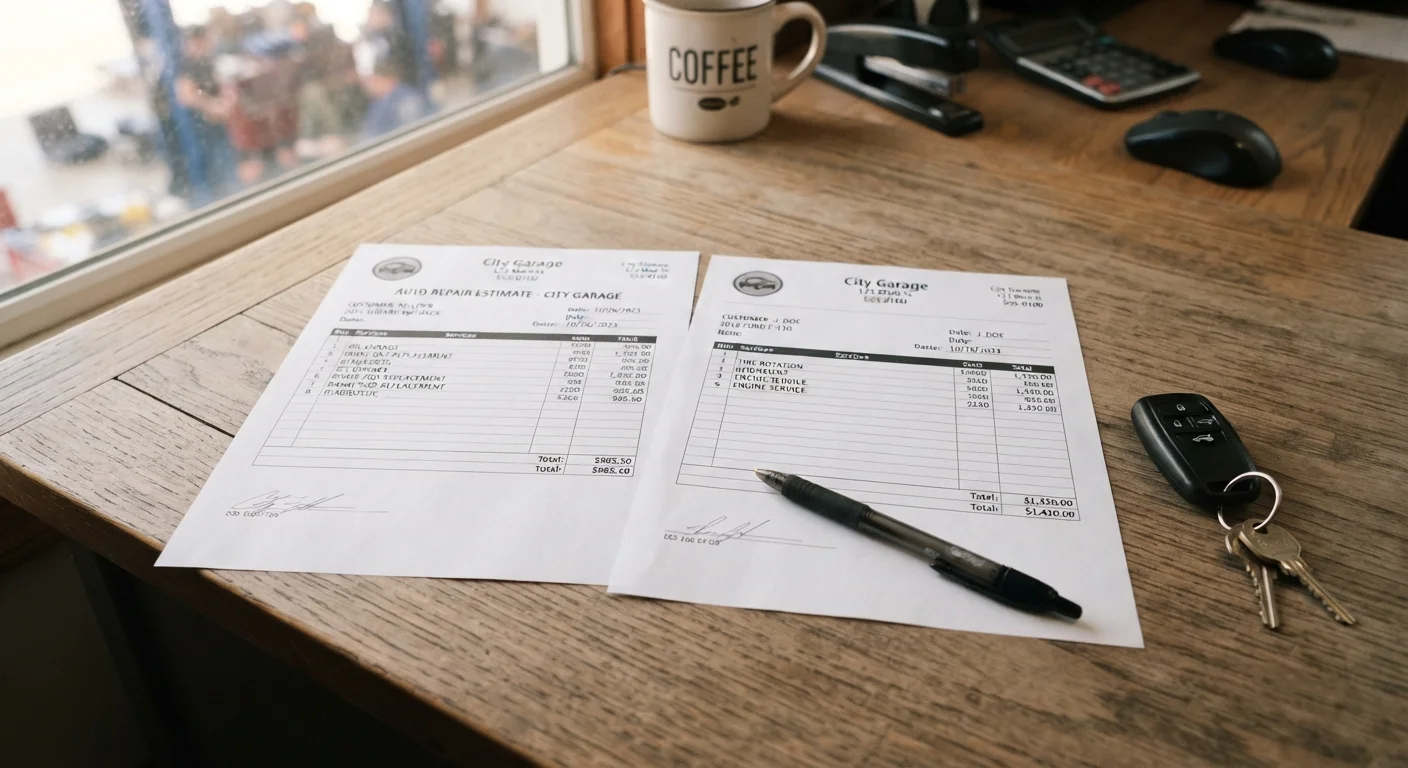
Photo: appropriateanswers.com editorial
—— In This Article
Key Takeaways
- A second opinion is worth pursuing any time a repair estimate exceeds $300 or involves parts you have not heard of before.
- Ask the first shop for a written, itemized estimate before leaving so you have something concrete to compare.
- Reference sites such as RepairPal publish labor time and parts cost ranges for common repairs in your ZIP code.
- You are not obligated to explain to a shop that you are shopping around; simply request the estimate and leave.
- A significant price gap between two estimates usually points to a difference in parts quality, labor rates, or scope.
When a second opinion is worth the time
Not every repair warrants a second trip across town. For a straightforward oil change or a wiper blade swap, price differences between shops are small and the task is well understood. A second opinion earns its time when the repair is expensive, the diagnosis is unfamiliar, or the shop is recommending work you did not notice any symptoms for.
Common situations where a second opinion pays off:
- Any estimate above $300, particularly for transmission, suspension, or engine work
- A diagnosis that relies on a single sensor reading without a physical inspection of the part
- A service recommendation for a vehicle that is already well-maintained (see weekend maintenance checks for what a well-maintained vehicle looks like)
- A shop that pressures you to authorize the work immediately
It is also worth checking whether the recommended service even appears in your manufacturer's schedule. Many drivers pay for services that the automaker never specified. Common auto maintenance myths cover several of these in detail.
Do not authorize repairs before you compare
Some shops will ask you to sign a work authorization before they even complete their inspection. Do not sign anything that authorizes repair work until you have a written, itemized estimate in hand. Authorization forms can bind you to costs you have not yet reviewed. Read every line before signing.
What to bring and what to look up first
Walking into a second shop with no documentation puts you at a disadvantage. The tools below give you the reference points to evaluate what both shops tell you.
Written itemized estimate from the first shop
Provides the baseline document you will use to compare labor time, parts cost, and repair scope at a second shop.
RepairPal or similar labor cost reference
Gives you a published cost range for common repairs in your area so you can judge whether an estimate is within a normal range.
Owner's manual or manufacturer maintenance schedule
Confirms whether the recommended repair or service appears in the manufacturer's maintenance timeline for your mileage.
Smartphone with camera
Lets you photograph any failed or worn parts the shop shows you, so you can research or show them to another shop.
What you will need
With those in hand, the comparison process is straightforward.
Verbal estimates are not enough
A price quoted over the phone or spoken at the counter gives you nothing to compare. Always ask for the estimate in writing with parts and labor listed separately. Without a written document, costs can shift by the time the work is done.
How to get and compare the estimates
Use your owner's manual as a reference
Before you visit any shop, check your owner's manual or manufacturer maintenance schedule to see whether the recommended service actually appears there. Shops sometimes recommend services that are not in the manufacturer's schedule for your mileage. Knowing what is actually due puts you in a stronger position when comparing estimates.
Get a written, itemized estimate from the first shop
Before you leave the original shop, ask for the estimate in writing with parts and labor listed as separate line items. A single lump-sum number tells you nothing useful. You want to see the specific part name, the part cost, the number of labor hours charged, and the shop's hourly labor rate. If the advisor resists, explain that you need the document for your records.
Look up a fair-price range before your second visit
Sites such as RepairPal publish estimated cost ranges for hundreds of common repairs broken down by ZIP code. Enter your vehicle details and the repair name to get a labor time range and parts cost range. This takes about five minutes and tells you whether the first estimate is within a typical range before you spend time driving to another shop.
Choose a second shop that is independent from the first
If the first estimate came from a dealership, go to an independent shop for the second opinion, or the other way around. Two shops in the same franchise chain often use the same labor rate guides and parts suppliers, which means the quotes may be nearly identical even if the underlying diagnosis is wrong. An ASE-certified independent mechanic (ASE stands for Automotive Service Excellence, a certification from the National Institute for Automotive Service Excellence) gives you a genuinely different perspective.
Present the same symptoms, not the first diagnosis
Describe what the car is doing: the sound, the warning light, the driving condition. Do not open with "Shop A says I need a new X." If you lead with the diagnosis, the second shop may simply confirm it rather than inspect the vehicle on its own terms. An independent diagnosis is the whole point of the second visit.
Compare the two estimates line by line
Place both written estimates next to each other and compare the labor hours claimed for each task, the parts costs, and whether the scope of work is the same. A price difference of 10 to 15 percent is common and often reflects different labor rates. A gap of 40 percent or more usually means the shops are quoting different work, using parts at different quality tiers (OEM versus aftermarket, for example), or one shop has identified additional problems the other missed.
OEM means Original Equipment Manufacturer, the same part specification used when the vehicle was built. Aftermarket parts are made by third parties and are often less expensive, though quality varies.
Ask clarifying questions before you decide
If one estimate is significantly lower, ask that shop what parts brand they plan to use and whether those parts carry a warranty. Ask both shops whether there is a labor warranty on the repair. A lower price with no warranty on parts or labor can cost more overall if the repair fails within a year. For context on which repairs genuinely require attention versus which ones can wait, see this guide to evaluating DIY versus professional repairs.
What a price gap actually tells you
A large difference between two estimates is data, not automatically proof that one shop is dishonest. Labor rates vary by region, shop type, and certification level. Dealerships typically charge higher hourly rates than independent shops, though their technicians specialize in your vehicle's brand. Parts pricing also varies: a shop using OEM parts will quote more than one using aftermarket alternatives, and both choices can be reasonable depending on the vehicle's age and how long you plan to keep it.
If both shops agree on the diagnosis but one is considerably less expensive, the gap usually comes down to parts sourcing or labor rate, not a reason to distrust the higher quote. If the two shops disagree on what needs to be repaired, ask each one to show you the failed component directly. A reputable shop will put the car on a lift and show you the problem. One that refuses that request is a shop to be cautious about.
Whatever you decide, keep both written estimates. If the repair fails early, those documents give you a paper trail when discussing warranty coverage with the shop that did the work.

Affordable Auto Care Editorial Team
Affordable Auto Care Editorial Team is the collective byline for our editorial team and contributor network. Articles published under this byline or an editorial pen name are researched, written, and reviewed according to our editorial standards for clarity, consistency, and independence before publication.
View author profile