
Auto Maintenance Myths That Are Quietly Draining Family Budgets
From oil changes every 3,000 miles to warming up your engine in winter, many standard car care rules are outdated. Here is what is actually true.
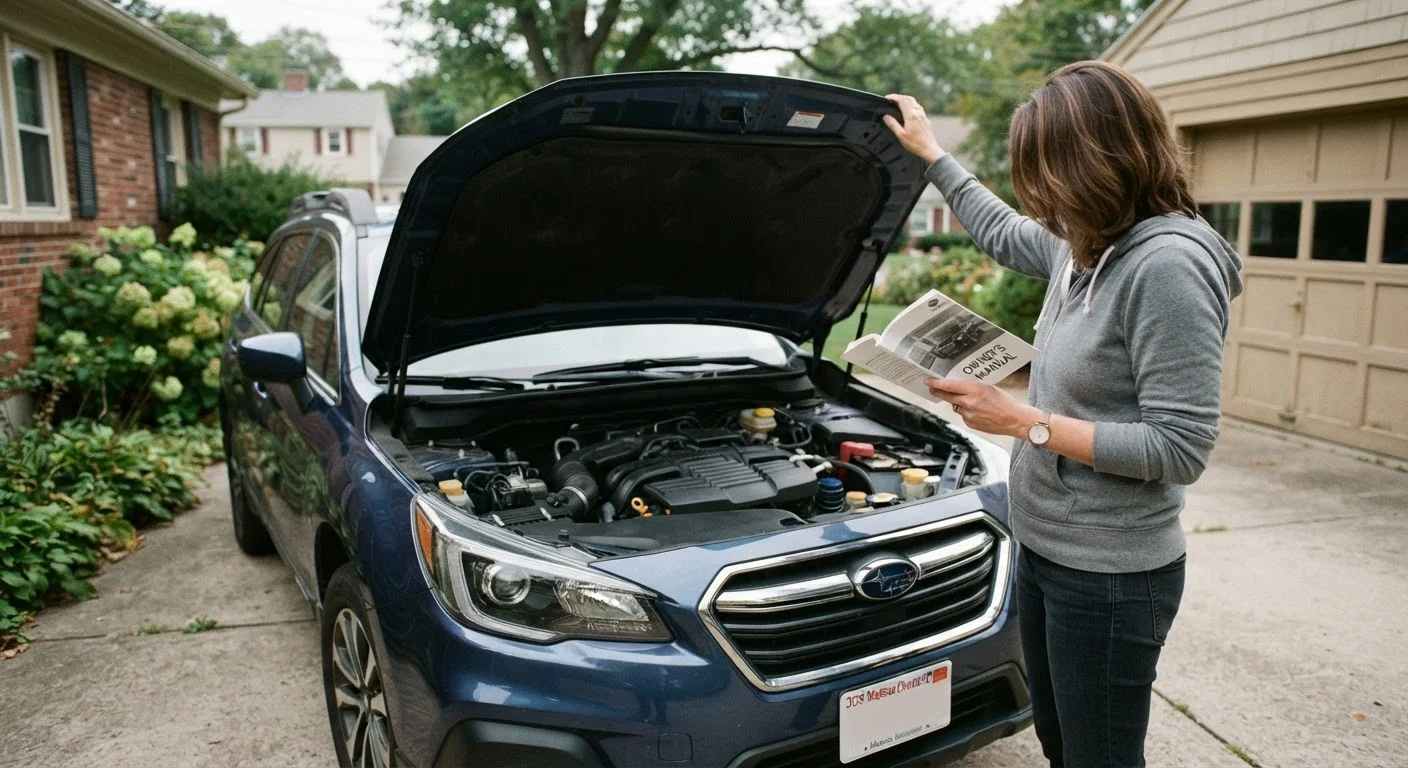
Photo: appropriateanswers.com editorial
Key Takeaways
- Most modern vehicles do not need an oil change every 3,000 miles; check your owner's manual for the actual interval.
- Idling to warm up your engine in winter wastes fuel and can leave unburned fuel residue on cylinder walls.
- Premium fuel offers no benefit for engines designed to run on regular grade gasoline.
- Tire pressure should be set to the number on your door jamb sticker, not the maximum printed on the tire sidewall.
- Flushing fluids on a fixed calendar schedule, rather than when your vehicle actually needs it, can cost families hundreds of unnecessary dollars.
Why outdated car advice costs real money
A lot of car maintenance advice circulating today dates back to the 1970s and 1980s, when engine technology, oil chemistry, and fuel systems worked very differently. Mechanics and quick-lube shops sometimes repeat it out of habit. Families who follow it without checking their owner's manual can spend hundreds of dollars a year on services their vehicles simply do not need.
The full cost of owning a car goes well beyond the purchase price. Unnecessary maintenance is one of the easiest places to overspend without realizing it. The myths below are the most common ones that quietly drain household budgets.
Myth
You need to change your oil every 3,000 miles, no exceptions.
Fact
Most modern vehicles running conventional oil go 5,000 to 7,500 miles between changes, and many using full synthetic oil go 10,000 miles or more.
The 3,000-mile rule predates modern engine tolerances and oil formulations. Today's synthetic and synthetic-blend oils are engineered to resist breakdown far longer than oils from decades past. The California Department of Resources Recycling and Recovery has cited the 3,000-mile interval as the source of millions of gallons of unnecessary waste oil each year. Your owner's manual states the interval your engine actually requires. Following it instead of the sticker on your windshield can cut your annual oil-change spending by half or more. See how oil type affects your interval for more detail.
Myth
You should let your engine idle for several minutes to warm it up in cold weather.
Fact
Modern fuel-injected engines warm up faster by driving gently than by idling, and prolonged idling can cause real engine wear.
Older carbureted engines needed a warm-up period because cold fuel did not vaporize well. Fuel-injected engines, which became the US standard by the late 1980s, use sensors to adjust the fuel mixture automatically. Idling in the driveway wastes fuel and, in very cold conditions, can wash oil off cylinder walls with unburned gasoline. About 30 seconds of idle time is sufficient before driving away gently. AAA has noted that excessive idling also increases wear on exhaust components over time.
Myth
Premium fuel will make any car run better and last longer.
Fact
Premium fuel benefits only engines specifically engineered to require or recommend it; it does nothing for engines designed for regular grade.
Premium gasoline has a higher octane rating, which resists pre-ignition (knocking) in high-compression engines. If your owner's manual says "regular unleaded," putting in premium is money spent with no measurable benefit. The Federal Trade Commission has stated that using higher-octane fuel than your car requires does not improve performance or fuel economy. For families filling up weekly, the price difference between regular and premium adds up to a noticeable annual sum with nothing to show for it.
Myth
Inflate your tires to the maximum pressure number printed on the sidewall.
Fact
The sidewall number is the maximum the tire can hold safely, not the target pressure for your car. The correct pressure is on the door jamb sticker.
Overinflated tires wear faster in the center of the tread, reduce the contact patch with the road, and make the ride harsher. The number stamped on the tire sidewall is a structural limit set by the tire manufacturer. The number on the sticker inside your driver's door jamb is the pressure recommended for your specific vehicle and load. Those two numbers are almost never the same. Proper tire care also includes rotation and alignment, which extend tire life and protect your suspension.
Myth
You need to flush all your fluids (transmission, coolant, brake fluid) every year.
Fact
Flush intervals vary widely by fluid type and vehicle, and many manufacturers specify intervals of 30,000 to 100,000 miles or more.
A yearly fluid-flush package sounds thorough, but it often has no connection to what your vehicle actually needs. Transmission fluid in many modern vehicles is rated to last 60,000 to 100,000 miles under normal driving. Coolant and brake fluid intervals also vary by manufacturer. Flushing healthy fluid early does not harm the vehicle, but it does cost money that could stay in your pocket. Your maintenance schedule is the right guide. Checking fluid condition at home is a free way to judge whether a flush is actually due.
Myth
A check engine light always means something expensive is wrong.
Fact
Check engine lights can be triggered by something as minor as a loose gas cap, and severity ranges widely.
The check engine light connects to your vehicle's onboard diagnostic system, which monitors dozens of sensors. A loose or cracked fuel cap is one of the most common triggers and costs nothing to fix. Other causes range from a failing oxygen sensor to a misfiring cylinder. The light alone tells you nothing about cost or urgency. Understanding what the light actually signals before authorizing any repair can prevent unnecessary charges.
How to use this information at the shop
Knowing the facts is one thing; applying them when a service advisor is standing across the counter is another. The most reliable reference you have is your owner's manual. It lists manufacturer-recommended intervals for every fluid, filter, and inspection item. If a shop recommends a service your manual does not list for your current mileage, ask to see the specific reason before approving it.
Getting a written estimate and a second opinion on larger repair bills is a reasonable step for any job over a few hundred dollars. See how to read your maintenance schedule to understand what each service interval actually covers, and which tasks are realistic to handle yourself to weigh where your time and money go furthest.

Affordable Auto Care Editorial Team
Affordable Auto Care Editorial Team is the collective byline for our editorial team and contributor network. Articles published under this byline or an editorial pen name are researched, written, and reviewed according to our editorial standards for clarity, consistency, and independence before publication.
View author profile