
The Real Costs of Skipping Routine Home Maintenance
Deferred maintenance rarely saves money. See how neglecting common upkeep tasks tends to turn small problems into expensive repairs down the road.
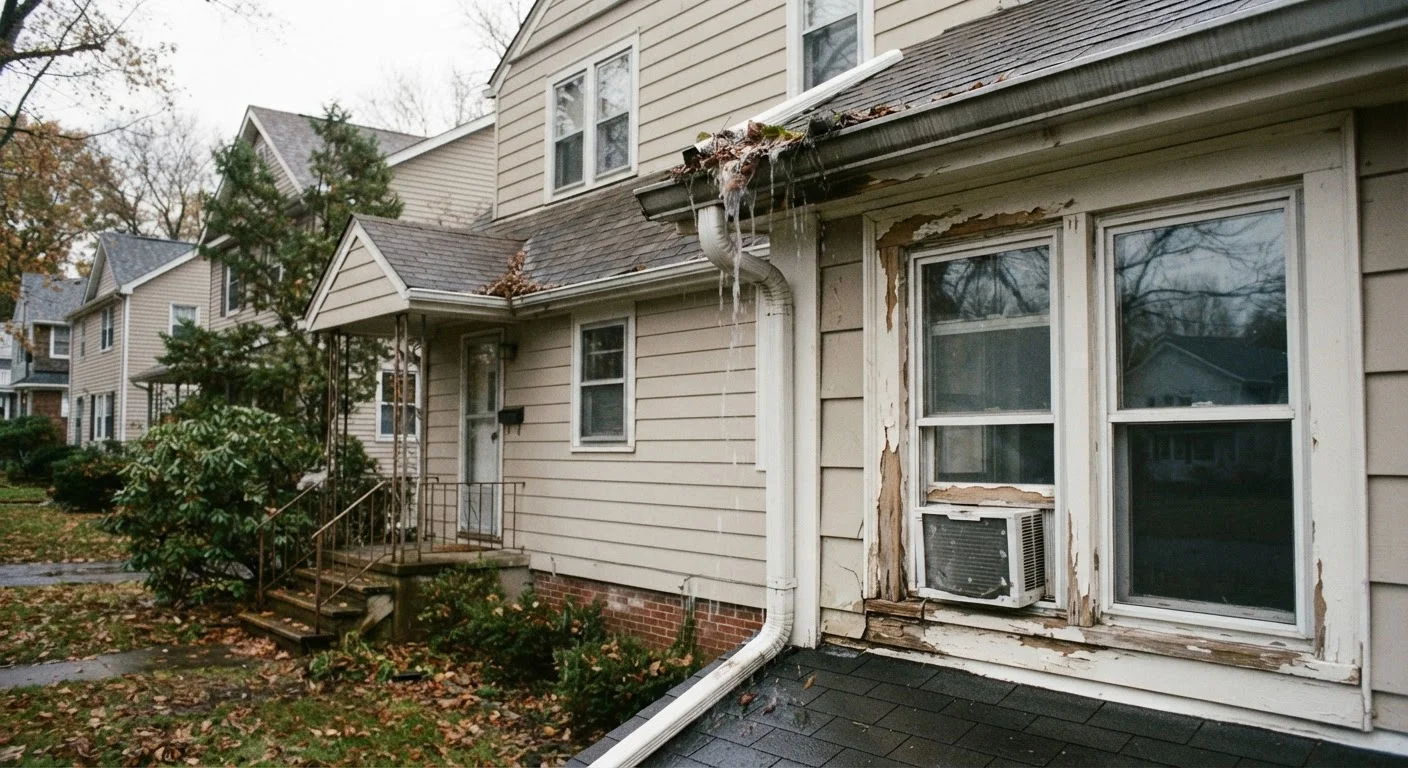
Photo: appropriateanswers.com editorial
—— In This Article
Key Takeaways
- Skipping routine maintenance often converts low-cost upkeep tasks into high-cost emergency repairs.
- Water intrusion from clogged gutters or failed caulk is among the most preventable causes of structural damage.
- HVAC filters, smoke detectors, and caulk lines are inexpensive to maintain and costly to ignore.
- Insurance claims and resale value are both affected when maintenance records show gaps.
- Many common upkeep tasks cost under $50 in materials and require no professional help.
Small costs prevent larger, unpredictable repair bills
A $15 faucet washer replaced when the drip starts avoids the water damage and plumber costs that follow a failed supply line. The ratio between maintenance cost and repair cost is rarely close.
Home value holds up better over time
Buyers and appraisers can spot deferred maintenance, and it shows up in offers. A home with documented maintenance history generally attracts stronger bids and fewer inspection-based price reductions.
Energy bills stay lower with functioning systems
Clean filters, sealed air leaks, and properly functioning HVAC equipment use less energy to achieve the same result. The savings per month are modest, but they accumulate across years.
Insurance claims stay off your record
Some water damage claims trace directly to maintenance failures a homeowner could have addressed. Multiple claims within a few years can raise premiums or trigger non-renewal.
Safety hazards get caught early
Annual checks of chimneys, dryer vents, electrical panels, and detectors catch conditions that have both financial and physical consequences when ignored.
Upfront costs require consistent budget allocation
Even low-cost tasks add up across a full year, and for families with tight cash flow, finding $200 to $400 annually for supplies and occasional professional help is a real constraint.
DIY errors can create new problems
Improper caulk application, wrong filter types, or incorrectly flushed water heaters can introduce issues rather than prevent them. Some tasks need a professional the first time to establish the correct baseline.
Maintenance does not eliminate all failures
A well-maintained HVAC system still reaches the end of its service life. Maintenance extends the window and reduces the chance of premature failure, but it does not make equipment last indefinitely.
Time investment is real, especially for larger homes
A thorough twice-annual walkthrough plus monthly filter changes and detector tests can take several hours per cycle. For working families, that time competes with other obligations.
Some tasks require professional inspection regardless
Roof conditions, chimney flue integrity, and electrical panels are genuinely difficult for most homeowners to assess safely. Skipping professional inspection on these specific systems carries risk that DIY walkthroughs do not eliminate.
What 'saving money' by skipping maintenance actually costs
Routine home maintenance feels like an expense with no visible return. The gutter drains, the furnace runs, the caulk holds, and nothing dramatic happens. That invisibility makes it easy to skip tasks, especially when the budget is tight.
The problem is that most home systems fail gradually. Water finds a gap in failed caulk and sits behind siding for months before the damage shows. A clogged dryer vent doesn't cause a fire the first week; it builds toward one over a season. By the time a symptom is obvious, the repair cost is rarely what it would have been for the original fix.
The pattern is consistent enough that home inspectors and contractors refer to it as deferred maintenance, and its presence during a home sale can reduce a property's negotiated price by more than the total cost of the neglected tasks. For families trying to stretch dollars, that math is worth taking seriously. See how a similar dynamic plays out in health spending: skipping annual checkups often costs more long-term.
Where deferred maintenance hits hardest
Some systems are more forgiving than others. A squeaky door hinge ignored for a year costs the same to fix as it did on day one. Other systems are not forgiving at all.
Water and moisture
Gutters blocked with debris send water against the fascia, into the soffit, and eventually toward the foundation. Repairing rotted fascia boards and addressing foundation moisture typically runs into the hundreds or low thousands of dollars. Cleaning gutters twice a year costs time and, if hired out, usually under $200. Cracked or missing caulk around windows and doors lets moisture into wall cavities, where it promotes mold and wood rot. A tube of exterior caulk costs a few dollars and takes under an hour to apply. The guide to caulking and weatherstripping covers exactly where to look and what materials hold up.
HVAC and air quality
A dirty furnace filter forces the blower motor to work harder. Blower motor replacements run $400 to $1,500 depending on the system. Filters cost $5 to $30 and need replacement every one to three months. Neglected air conditioning coils follow the same logic: a coil cleaning service costs far less than a compressor replacement.
Safety systems
Smoke and carbon monoxide detectors with dead batteries provide no protection. Replacing a $2 battery on schedule costs almost nothing. The downstream consequence of a non-functional detector is not financial.
$1 to $4
Estimated return per $1 spent on maintenance
Home repair industry guidelines commonly cite this range as the long-term cost ratio between preventive maintenance and deferred repair, though actual results vary by system and region.
90%
Of house fires involving dryers linked to lint buildup
The U.S. Fire Administration has reported that failure to clean dryer vents is the leading contributing factor in dryer fires reported to fire departments.
$3,000+
Average cost to repair water-damaged walls and flooring
Restoration industry estimates for interior water damage repairs vary widely, but mid-range cases involving wall cavities and subfloor replacement routinely exceed this figure.
Pros of staying on a maintenance schedule
Keeping up with routine tasks produces concrete financial and practical benefits that show up over time.
Small costs prevent larger, unpredictable repair bills
A $15 faucet washer replaced when the drip starts avoids the water damage and plumber costs that follow a failed supply line. The ratio between maintenance cost and repair cost is rarely close.
Home value holds up better over time
Buyers and appraisers can spot deferred maintenance, and it shows up in offers. A home with documented maintenance history generally attracts stronger bids and fewer inspection-based price reductions.
Energy bills stay lower with functioning systems
Clean filters, sealed air leaks, and properly functioning HVAC equipment use less energy to achieve the same result. The savings per month are modest, but they accumulate across years.
Insurance claims stay off your record
Some water damage claims trace directly to maintenance failures a homeowner could have addressed. Multiple claims within a few years can raise premiums or trigger non-renewal.
Safety hazards get caught early
Annual checks of chimneys, dryer vents, electrical panels, and detectors catch conditions that have both financial and physical consequences when ignored.
For families who want to take on more of this work themselves, the DIY home improvement myths article separates genuinely money-saving tasks from the ones that tend to backfire.
Cons and real limitations of maintenance spending
Maintenance schedules are not a perfect solution, and it is worth being honest about their limits.
Upfront costs require consistent budget allocation
Even low-cost tasks add up across a full year, and for families with tight cash flow, finding $200 to $400 annually for supplies and occasional professional help is a real constraint.
DIY errors can create new problems
Improper caulk application, wrong filter types, or incorrectly flushed water heaters can introduce issues rather than prevent them. Some tasks need a professional the first time to establish the correct baseline.
Maintenance does not eliminate all failures
A well-maintained HVAC system still reaches the end of its service life. Maintenance extends the window and reduces the chance of premature failure, but it does not make equipment last indefinitely.
Time investment is real, especially for larger homes
A thorough twice-annual walkthrough plus monthly filter changes and detector tests can take several hours per cycle. For working families, that time competes with other obligations.
Some tasks require professional inspection regardless
Roof conditions, chimney flue integrity, and electrical panels are genuinely difficult for most homeowners to assess safely. Skipping professional inspection on these specific systems carries risk that DIY walkthroughs do not eliminate.
For homeowners who want to build a realistic maintenance plan without overcommitting, Smart Family Finance has budgeting frameworks that apply directly to home upkeep costs.
Building a simple, low-cost maintenance routine
Most of the high-value maintenance tasks fall into a short list: change HVAC filters monthly or quarterly, clean gutters in spring and fall, inspect and re-caulk windows and doors annually, test smoke and CO detectors monthly, flush the water heater once a year to clear sediment, and check the roof and attic after major storms.
None of these require professional help for most homeowners in good health. The materials cost under $100 annually for a typical single-family home. A written schedule posted inside a utility closet or added to a phone calendar removes the need to remember deadlines.
The same principle applies to vehicles. The weekend maintenance checks guide covers quick inspections any driver can do at home, and the logic is identical: small regular effort prevents large irregular expense.
This article provides general home maintenance information for educational purposes. Costs mentioned are general estimates and will vary by region, home age, and specific conditions. For tasks involving electrical, gas, structural, or plumbing systems, consult a licensed professional and verify local permit requirements before starting work.

Home On A Budget Editorial Team
Home on a Budget Editorial Team is the collective byline for our editorial team and contributor network. Articles published under this byline or an editorial pen name are researched, written, and reviewed according to our editorial standards for clarity, consistency, and independence before publication.
View author profile