
Myths About DIY Home Improvement That Cost Families More Than They Save
Not every DIY shortcut is a bargain. Separate common home improvement misconceptions from evidence-based guidance so your next project goes smoothly.
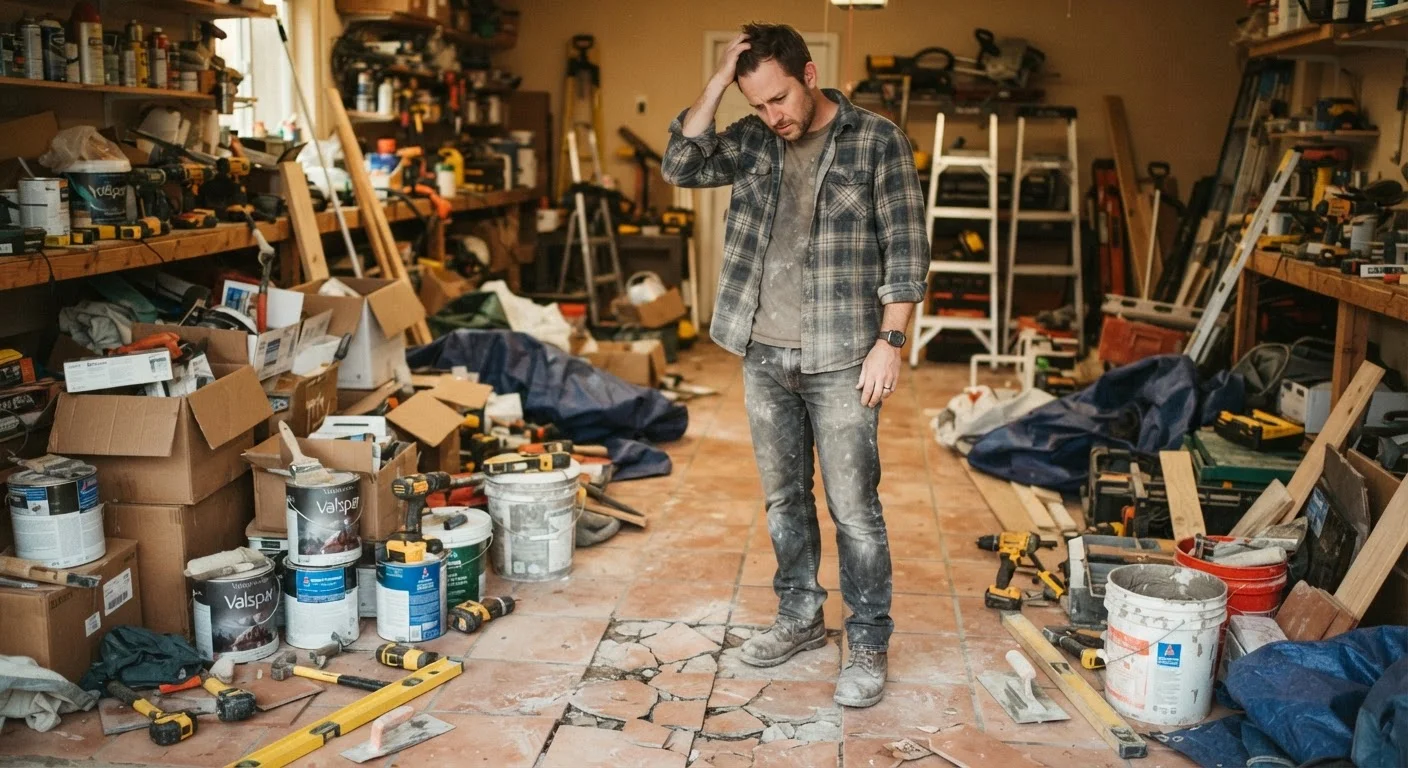
Photo: appropriateanswers.com editorial
—— In This Article
Key Takeaways
- Many popular DIY beliefs lead to more expensive repairs than the original professional job would have cost.
- Permits and inspections are not optional extras; skipping them can void insurance and block home sales.
- Hazardous work involving electrical panels, gas lines, or structural elements requires a licensed professional.
- Matching the task to your actual skill level, not your optimism, determines whether DIY saves or costs money.
Why DIY myths are expensive
The promise of DIY home improvement is real: careful homeowners do save money on straightforward projects every day. The problem is that a set of durable myths surrounds that promise, pushing families toward projects that end up costing more than a contractor would have charged. Misread a situation once and you are looking at mold remediation, code violations, or structural damage that the original shortcut was supposed to prevent.
The myths below are the ones that show up most often when homeowners call a professional to fix a previous DIY attempt. Understanding where they go wrong is the first step toward spending project money wisely. For a broader look at how neglected tasks compound costs, see the real costs of skipping routine home maintenance.
Myth
Any home repair is cheaper when you do it yourself, no matter the job.
Fact
DIY saves money on well-matched tasks, but the wrong project can cost two to three times a professional quote once mistakes are corrected.
The savings math only works when your skill level matches the task's complexity. A homeowner who installs a subfloor incorrectly may face flooring replacement, moisture damage, and a floor-leveling job on top of the original repair. Professionals carry liability insurance; a homeowner's general policy may not cover damage caused by unpermitted or improperly performed work. Before starting any project, honestly assess whether you have the tools, the knowledge, and a realistic plan for what happens if something goes wrong mid-job.
Myth
You can skip the permit because inspectors only find problems they can use to charge you more.
Fact
Permits protect the homeowner. Unpermitted work can void your homeowner's insurance, trigger fines, and make your home harder to sell.
When a home goes under contract, buyers' home inspectors and title companies routinely check permit records. Unpermitted additions, electrical work, or structural changes can kill a sale or force the seller to pay for demolition and redo the project to code before closing. Homeowner's insurance policies commonly exclude losses caused by work that was required to be permitted but was not. The permit fee for most residential projects is modest compared with those downstream consequences.
Myth
Watching a video tutorial means you are ready to tackle any repair shown in it.
Fact
Video tutorials demonstrate steps under controlled conditions; they cannot account for the specific age, condition, or configuration of your home's systems.
A tutorial filmed in a new construction home will not show what happens when you open a wall in a 1950s house and find knob-and-tube wiring, asbestos-wrapped pipes, or non-standard framing. These discoveries require professional assessment before any work continues. Tutorials are genuinely useful for building familiarity with a process, but they cannot replace hands-on experience or knowledge of your home's actual condition.
Myth
Using the cheapest materials available keeps project costs down.
Fact
Low-grade materials often fail sooner, requiring repeat labor and replacement costs that exceed the original savings.
Grout, caulk, exterior paint, and fasteners are areas where material quality has a direct effect on how long the finished work lasts. Exterior caulk that fails after one season means stripping and reapplying every year; mid-grade caulk rated for 25-year performance may cost a few dollars more per tube but eliminates the repeated labor. The same logic applies to subfloor adhesive, roofing underlayment, and plumbing supply lines. Spending a modest amount more on tested materials is not a luxury; it is the part of the budget that makes the labor worthwhile.
Myth
Electrical work is just following a wiring diagram, so any careful person can do it safely.
Fact
Household electrical systems involve risks that can cause fires or fatal shocks; most electrical work beyond simple fixture swaps requires a licensed electrician and a permit.
Replacing a light fixture or a standard outlet on a dedicated circuit is within reach for a careful, informed homeowner in many jurisdictions. Work involving the main panel, service entrance, new circuits, or aluminum wiring is a different category entirely. Wiring errors that pass a visual check can still arc inside a wall and start a fire months later. Most states require licensed electricians for panel work, and homeowner's insurance policies scrutinize electrical fire claims for evidence of unpermitted modifications.
Myth
If the surface looks fine after a DIY repair, the job is done correctly.
Fact
Many serious defects, including moisture intrusion, improper fastening, and compromised waterproofing, are invisible at the surface until significant damage has already occurred.
A tile shower that looks perfect on day one can harbor water infiltration behind improperly applied membrane or inadequate grout. That moisture works its way into the subfloor and wall framing over months, producing mold and rot that cost far more to remediate than a correctly installed shower would have. Surface appearance is not a reliable test of structural or waterproofing quality. Where manufacturer instructions specify cure times, membrane overlaps, or inspection steps, following them exactly is what makes the repair last.
Where to draw the DIY line
Painting interior walls, replacing cabinet hardware, installing a new faucet cartridge, and patching drywall are tasks most careful adults can handle with the right preparation. Paint projects that return real value without a professional's price tag lays out which painting jobs are genuinely DIY-friendly. For plumbing, before you call a plumber separates tasks a homeowner can safely tackle from those that need a licensed pro.
The boundary is straightforward: if the work requires a permit in your municipality, involves electrical panels or service entrance wiring, touches gas supply lines, or affects load-bearing structure, hire a licensed contractor. The permit fee and labor cost less than the liability, the insurance gap, or the repair bill that follows a mistake. Local building departments will tell you what requires a permit at no charge, and many inspectors would rather answer a question upfront than condemn finished work later.
This article is for general informational purposes only. Always verify local building codes and consult a licensed professional before beginning any project that involves structural, electrical, plumbing, or gas systems.

Home On A Budget Editorial Team
Home on a Budget Editorial Team is the collective byline for our editorial team and contributor network. Articles published under this byline or an editorial pen name are researched, written, and reviewed according to our editorial standards for clarity, consistency, and independence before publication.
View author profile