
Synthetic vs. Conventional Oil: Which One Your Engine Actually Needs
Synthetic oil costs more upfront, but is it always worth it? Here is how to decide based on your vehicle, mileage, and driving habits.
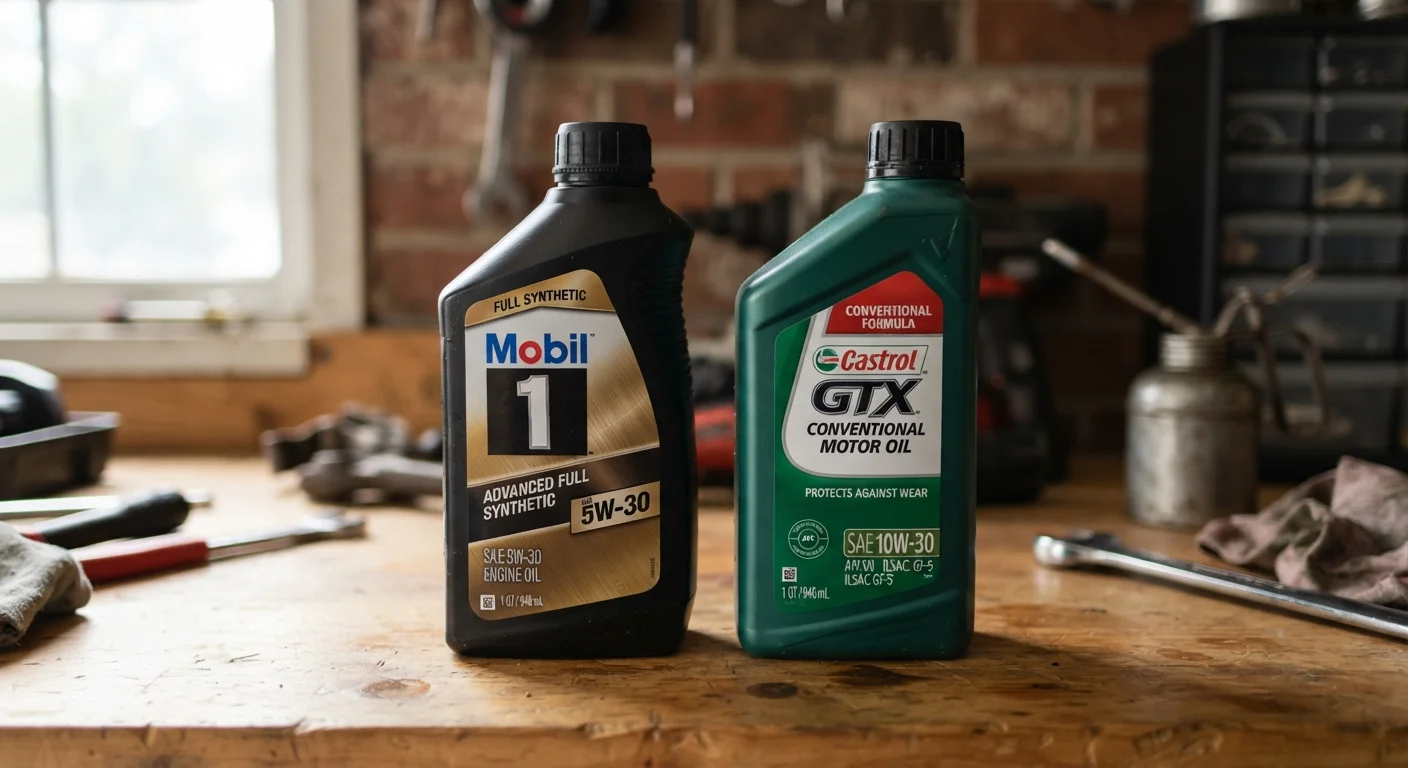
Photo: appropriateanswers.com editorial
—— In This Article
Key Takeaways
- Your owner's manual specifies which oil type your engine requires; that overrides any general advice.
- Synthetic oil typically costs more per quart but can last two to three times longer between changes.
- Conventional oil works fine in many older or simpler engines that were not designed for synthetic.
- Turbocharged and high-performance engines generally need synthetic to handle heat and stress properly.
- Switching from conventional to synthetic in a high-mileage engine carries some risk; consult a mechanic first.
What separates synthetic from conventional oil
Conventional motor oil is refined directly from crude oil. The refining process removes many impurities, but the base molecules remain uneven in size and shape, which affects how the oil behaves under heat and pressure.
Synthetic oil starts with similar raw materials in many cases, but the base molecules are chemically restructured to be uniform in size and shape. That consistency gives synthetic oil more predictable behavior at temperature extremes and under sustained engine stress. It also breaks down more slowly, which is why synthetic oil generally lasts longer between changes.
A third category, synthetic blend (sometimes called semi-synthetic), mixes both types. Blends can be a middle-ground choice for certain driving profiles, though they follow the same basic rule: check what your manufacturer specifies before choosing.
| Criterion | Synthetic motor oil | Conventional motor oil |
|---|---|---|
| Base material | Chemically engineered molecules | Refined crude oil |
| Average cost per change | $65 to $125 (general range) | $35 to $75 (general range) |
| Typical change interval | 7,500 to 10,000+ miles | 3,000 to 5,000 miles |
| Performance in extreme temps | Holds viscosity better | Can thicken or thin more |
| Turbocharged engine suitability | Generally required | Not recommended |
| Best fit | Modern, performance, or turbo engines | Older or simple non-turbo engines |
How to know which one your engine needs
The owner's manual is the correct starting point, not the oil rack at a shop. Manufacturers test their engines with specific oil types and viscosity grades, and those recommendations are based on engineering requirements, not marketing.
If your manual says 5W-30 full synthetic, using conventional oil voids the basis of that recommendation. If it says conventional is acceptable, paying extra for synthetic provides minimal real-world benefit for that engine in normal driving conditions.
Turbocharged engines are worth noting separately. Turbochargers spin at extremely high speeds and generate intense heat. Conventional oil can break down faster under those conditions, leaving deposits on turbo components. Most turbocharged vehicles specify synthetic for that reason. If you are unsure whether your engine is turbocharged, the vehicle's spec sheet or a quick check with a mechanic will confirm it.
Several common oil change myths lead drivers to pay for oil type upgrades they do not need, or to skip changes longer than their oil can actually handle. The manual-first approach avoids both mistakes.
The real cost comparison
A conventional oil change at an independent shop typically runs between $35 and $75, depending on location and vehicle. Synthetic typically runs $65 to $125 for the same service. Those figures are general ranges based on commonly reported pricing; your actual cost will vary.
The math changes when you factor in change intervals. Conventional oil is generally changed every 3,000 to 5,000 miles. Full synthetic can go 7,500 to 10,000 miles or more in many vehicles, with some manufacturer schedules pushing to 15,000 miles. Fewer changes per year can partially or fully offset the higher per-change cost of synthetic.
2-3x
Longer change interval vs. conventional
Full synthetic oil commonly lasts two to three times longer per service interval than conventional, based on manufacturer guidelines across many vehicle lines.
$35-$125
Typical per-change cost range
Conventional oil changes generally fall at the lower end of this range; full synthetic changes fall at the higher end, with significant variation by region and shop.
75,000+
Miles where oil-switch caution applies
Mechanics commonly flag high-mileage engines above roughly 75,000 miles as candidates for extra scrutiny before switching from conventional to full synthetic.
That said, interval claims on oil bottles are not universal. A vehicle driven mostly in stop-and-go city traffic, extreme heat, or with a lot of towing is under more stress than highway miles alone. Shorter real-world intervals make sense in those cases regardless of what the label suggests.
The broader picture of car ownership costs, including oil type decisions, is worth mapping out ahead of time. Maintenance costs are one of several budget items many families underestimate when they calculate what a vehicle actually costs to own.
Switching oil types in a high-mileage engine
One situation that deserves specific attention is switching from conventional to synthetic in a vehicle that has used conventional oil for most of its life, particularly above 75,000 miles. Synthetic oil is a better detergent than conventional, meaning it can loosen accumulated sludge and deposits inside the engine. In a well-maintained engine, this is generally not a problem. In an engine with significant buildup, loosened deposits can clog oil passages or seals.
There is also a persistent concern about synthetic oil and older seals. Modern synthetic formulas are designed to be compatible with most engine seals, so outright seal failure from switching is uncommon. However, if an engine already has worn or brittle seals, the added detergency can surface a leak that conventional oil was, in effect, temporarily masking.
If you are considering the switch on a high-mileage vehicle, a mechanic can assess whether it makes sense. Knowing when to involve a mechanic versus handling something yourself is a judgment call that depends on your vehicle's condition and your comfort level with the work.

Affordable Auto Care Editorial Team
Affordable Auto Care Editorial Team is the collective byline for our editorial team and contributor network. Articles published under this byline or an editorial pen name are researched, written, and reviewed according to our editorial standards for clarity, consistency, and independence before publication.
View author profile