
Raised Bed vs. In-Ground Garden: Which Setup Actually Costs Less Over Time
A side-by-side look at startup costs, maintenance, and long-term value for raised bed and in-ground vegetable gardening on a family budget.
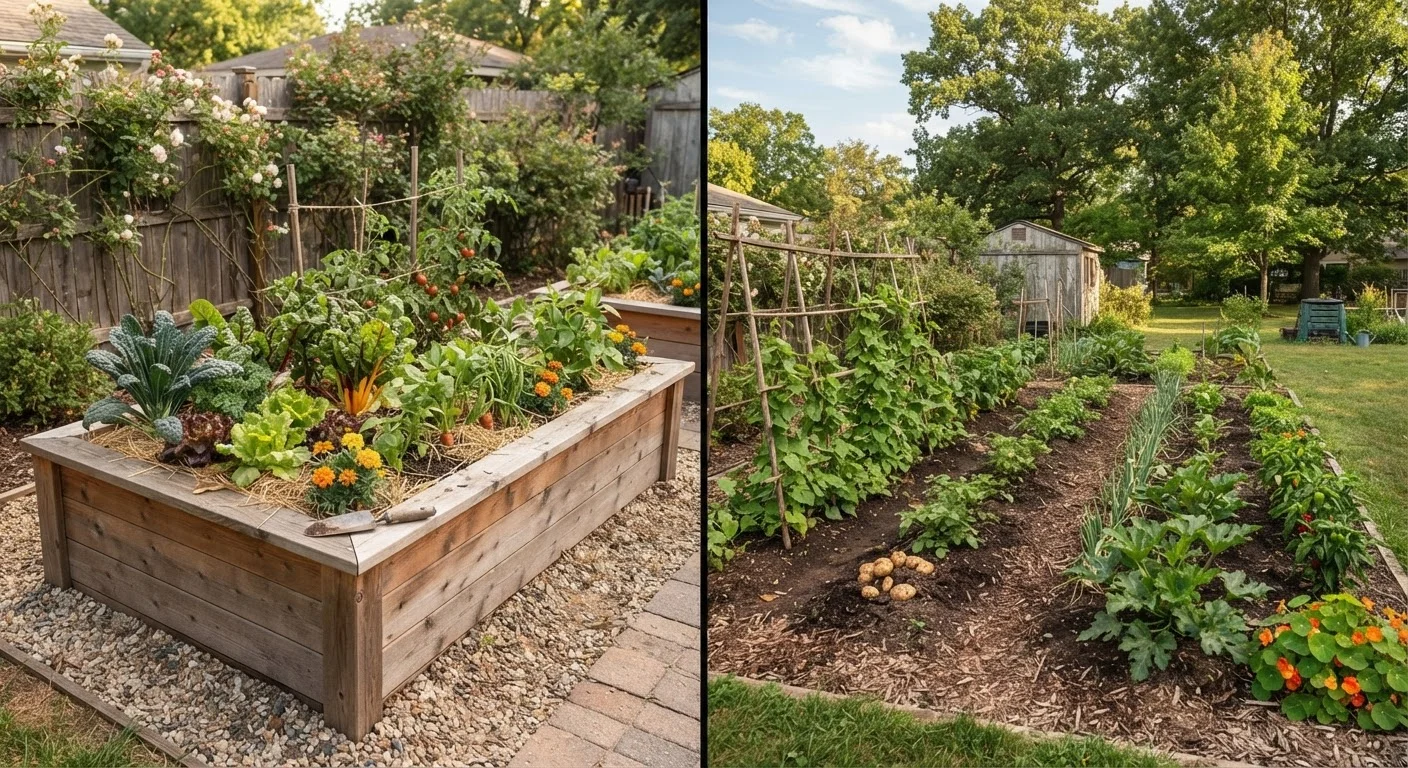
Photo: appropriateanswers.com editorial
—— In This Article
Key Takeaways
- Raised beds cost significantly more to start, often $100 to $500 or more depending on size and materials.
- In-ground gardens can start near zero but may require soil amendment costs that rival raised bed fill.
- Raised beds typically save water and reduce weeding time, lowering ongoing labor and supply costs.
- In-ground beds produce lower amortized costs over a decade if native soil is already reasonable.
- Poor native soil narrows or eliminates the long-term cost advantage of in-ground gardening.
- Both setups benefit from composting, which cuts recurring soil amendment expenses over time.
What you actually spend to get started
An in-ground garden can start with almost nothing. Clear the sod, turn the soil with a fork or tiller, mix in compost, and plant. If you already own basic tools, your first-year cost might be $20 to $40 in soil amendment and seeds. That is the ceiling of the in-ground advantage: when startup cost is the only number you care about, it wins.
A raised bed is a different calculation. A single 4x8-foot cedar frame kit runs $80 to $200 at most home improvement stores. You then need to fill it. A standard 4x8 bed at 12 inches deep holds roughly 32 cubic feet of growing mix. Good blended fill, bought in bags or bulk, costs $80 to $150 depending on your region. Add fasteners, liner fabric, and a simple drip line if you want one, and a single bed can easily reach $300 to $400 before you plant a single seed.
Families who build two or three beds to feed a household can clear $700 to $1,000 in year one. That is real money, and it matters. Soil quality problems are behind many first-year gardening disappointments, so spending on good fill is not optional if you want reliable harvests.
| Criterion | Raised bed garden | In-ground garden |
|---|---|---|
| Typical year-one cost | $300 to $1,000+ for 1 to 3 beds | $20 to $80 with basic amendments |
| Annual upkeep cost | $50 to $100 (soil, seeds, repairs) | $20 to $50 (compost, seeds) |
| Frame replacement | Every 5 to 15 years depending on material | None |
| Weed pressure | Lower, especially first few years | Higher without regular mulching |
| Soil control | Full control from day one | Depends on native soil quality |
| Water efficiency | Higher with drip irrigation | Variable, often lower |
| Soil contamination risk | Minimal with clean purchased fill | Possible on urban or older lots |
| 10-year estimated total | $1,200 to $1,800+ | $150 to $300 (good native soil) |
Recurring costs and what drives them
After the first year, the cost gap starts to shift. Raised beds drain well and warm up faster, which typically means less water waste and fewer disease problems than in-ground beds in wet climates. That can translate to lower water bills and less spending on fungicide or replacement transplants, though neither effect is guaranteed.
In-ground beds, maintained with annual compost additions, build soil health over time and need very little purchased input after a few seasons. The catch is that productive in-ground soil requires consistent effort. Skip the compost for a year or two and yields drop, which often pushes gardeners toward purchased fertilizers that add cost back in.
Raised bed frames have a lifespan. Untreated pine may last 3 to 5 years before rotting. Cedar typically holds up 10 to 15 years. Composite lumber or galvanized metal frames last longer but cost more upfront. When a frame needs replacing, you absorb that cost again. In-ground beds have no frame to replace.
$700+
Common year-one raised bed cost for two 4x8 beds
Based on typical retail prices for cedar frames and bagged or bulk blended growing mix in the US market.
3 to 5 years
Lifespan of untreated pine raised bed frames
Untreated pine exposed to soil moisture and irrigation deteriorates faster than cedar or composite alternatives.
$15 to $30
Typical soil lead test cost through cooperative extension
State cooperative extension services offer affordable soil testing that can determine whether raised beds are necessary on older urban lots.
10 to 15 years
Expected lifespan of cedar raised bed frames
Cedar's natural oils resist rot, making it a longer-lasting and more cost-effective frame material than standard pine over time.
The 10-year cost picture
Spread costs across a decade and the picture becomes clearer. An in-ground plot with reasonable native soil, maintained with free or low-cost compost, may cost under $200 total over 10 years in tools, amendments, and seeds. That is roughly $20 per year to produce a meaningful amount of vegetables for a family.
A two-bed raised setup, built with cedar and good fill, might cost $700 to $900 in year one, then $50 to $100 per year in topping off soil, seeds, and occasional repairs. Over 10 years, that totals $1,200 to $1,800 before any frame replacement. The per-year cost is still defensible if you value the gardening experience or lack workable native soil, but the math does not favor raised beds on cost alone when the soil underneath your feet is already decent.
One factor that closes the gap: homemade compost. A basic compost bin fed with kitchen scraps and yard waste can supply most of the annual topping-off a raised bed needs, cutting ongoing fill costs close to zero. The same compost improves in-ground beds. Either way, composting is the single habit with the clearest long-term financial return in home vegetable gardening.
Hidden costs worth knowing before you build
Several costs show up only after you commit. Raised beds on sloped ground may need leveling work or retaining structures. Beds placed on concrete patios need additional depth, which means more fill. If you want a drip irrigation system, raised beds are easier to fit with one, but the hardware cost is real.
In-ground gardens on compacted or contaminated soil present their own hidden costs. Urban lots and older suburban properties sometimes have elevated lead levels in native soil. Testing through your state cooperative extension service costs $15 to $30, and if results come back elevated, raised beds with clean fill become less of an option and more of a necessity. That changes the whole framing of the cost comparison.
Water access also matters. A raised bed positioned far from a spigot without irrigation may lose plants in a dry summer, wiping out that season's value. Plan water routing before you build, not after.
Budgeting for a garden is not entirely different from budgeting for any other household project. Knowing your real recurring costs before you start is the same discipline covered in articles like overlooked ownership costs. The principle holds: the purchase price is rarely the whole story.

Home On A Budget Editorial Team
Home on a Budget Editorial Team is the collective byline for our editorial team and contributor network. Articles published under this byline or an editorial pen name are researched, written, and reviewed according to our editorial standards for clarity, consistency, and independence before publication.
View author profile