
Camping, Vacation Rentals, and Budget Hotels: Weighing Your Lodging Options as a Family
Each lodging type comes with different trade-offs on cost, comfort, and flexibility. This breakdown helps families choose what fits their trip and budget.
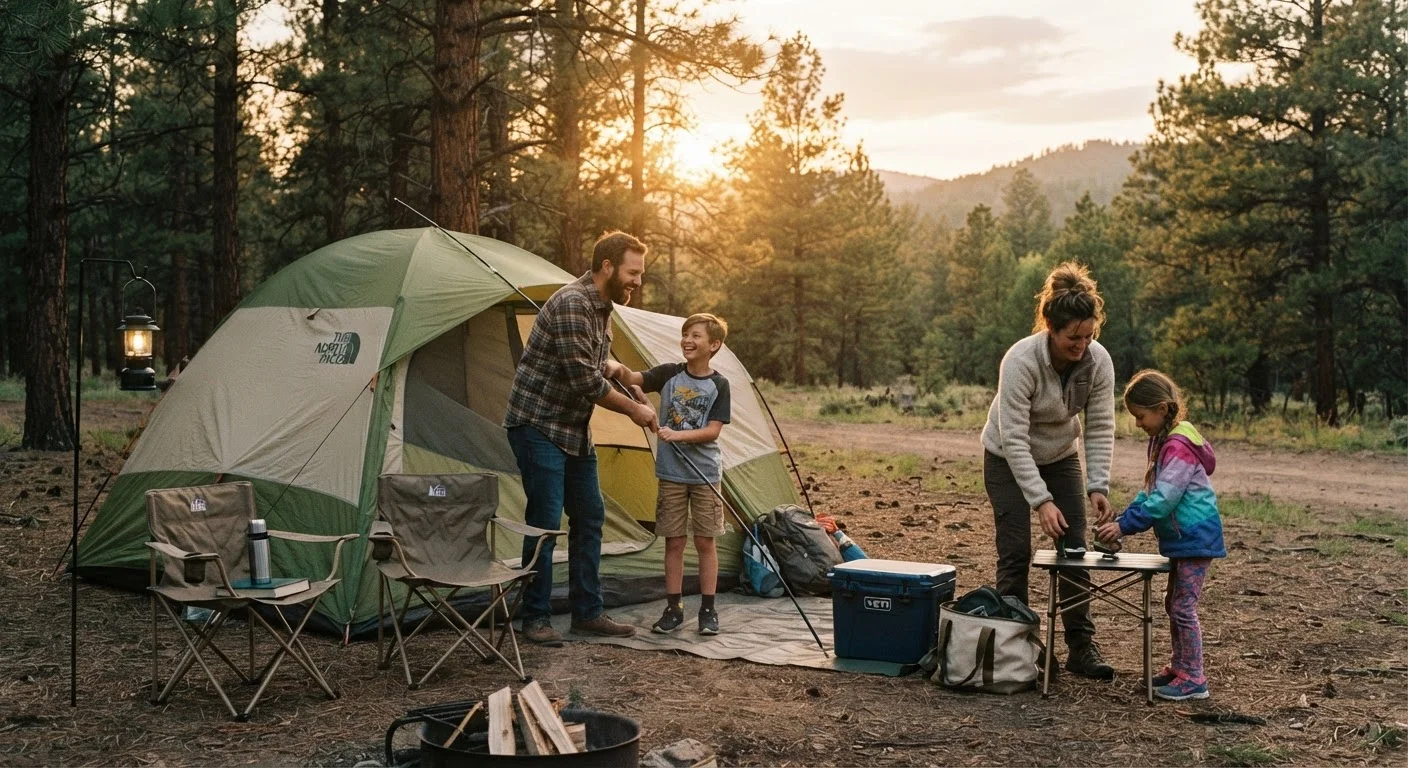
Photo: appropriateanswers.com editorial
—— In This Article
Key Takeaways
- Camping costs the least per night but requires gear investment and tolerance for limited amenities.
- Vacation rentals can save money for larger families through shared kitchen use and multi-bedroom layouts.
- Budget hotels offer consistent amenities and zero gear requirements, but rarely include kitchen access.
- The right choice depends on family size, trip length, destination type, and your group's comfort floor.
- Combining lodging types on a single trip often yields the best balance of cost and comfort.
What each option actually costs
Nightly rates tell only part of the story. A campsite at a state park might run $20 to $45 per night, but first-time campers who need to buy tents, sleeping bags, and cooking equipment can spend $300 to $600 before the trip even starts. That gear cost amortizes over multiple trips, but it is real upfront money. For more on how lodging fits into the full picture, see the real cost of a US family road trip.
Vacation rentals typically run $120 to $250 per night depending on region and season, but that rate covers the whole unit. A family of six splitting a three-bedroom rental for $180 per night pays $30 per person, which competes favorably with two hotel rooms. The built-in kitchen changes the math further: cooking four of seven dinners in saves a family of four roughly $200 to $400 over a week compared to eating every meal out.
Budget hotels average $80 to $130 per night for a single room, and many families need two rooms, which pushes the cost to $160 or more. That said, there are no cleaning fees, no gear to pack, and free cancellation policies are common, which matters when travel plans shift.
| Camping | Vacation Rentals | Budget Hotels | |
|---|---|---|---|
| Typical nightly cost (family of 4) | $20 to $45 per site | $120 to $250 per unit | $80 to $130 per room |
| Kitchen access | Camp stove or fire only | Full kitchen included | Rarely; microwave common |
| Space and privacy | Outdoors; shared facilities | Most space, multiple rooms | Limited; one or two rooms |
| Booking lead time needed | 3 to 6 months for popular sites | 2 to 4 months in season | Days to weeks |
| Cancellation flexibility | Site-dependent, often strict | Varies by host, often strict | Usually free within 24 to 48 hrs |
| Upfront gear cost | $300 to $600 for new campers | None | None |
| Best trip length | 2 to 7 nights | 4 to 14 nights | 1 to 3 nights |
Comfort, space, and daily logistics
Camping gives families the most outdoor access but the fewest creature comforts. Bathrooms may be shared pit toilets or a walk away. Cooking over a camp stove takes longer than a microwave. Kids who sleep poorly in unfamiliar or cold conditions will drain everyone's energy by day two. That said, campgrounds in national and state parks put families directly inside the experience, which is hard to match. National and state parks differ significantly in amenity level and crowding, which affects how comfortable a camping stay will actually feel.
Vacation rentals give families the most living space. A separate living room, full kitchen, and multiple bedrooms allow children different bedtimes without the whole family bunking in one room. Laundry access on longer trips cuts the amount of clothing families need to pack. The tradeoff is variability: rental quality ranges widely, and photos do not always match reality. Reading reviews carefully and booking properties with a track record matters more here than with chain hotels.
Budget hotels are the most predictable of the three. A family knows they will have a working toilet, a climate-controlled room, and probably a continental breakfast. What they will not have is space. Four people in a standard double room is workable for two or three nights; a week in that footprint becomes uncomfortable. Suites with pull-out sofas or connecting rooms help, but they cost more.
Flexibility and booking considerations
Camping reservations at popular sites, especially in national parks, book out months in advance. Families planning a summer trip to a high-demand park should expect to search for availability in the prior winter. Walk-up sites exist but are not reliable for a family counting on a specific location. State park campgrounds are generally easier to book and often hold sites closer to the travel date.
Vacation rentals have moderate flexibility. Peak-season properties in beach or mountain destinations can require minimum stays of five to seven nights, which limits short-trip options. Cancellation policies vary by host and can be strict, so travel disruptions may result in partial or no refunds. Booking two to four months out for summer or holiday travel is a reasonable baseline.
Budget hotels carry the most booking flexibility. Most chains allow cancellation within 24 to 48 hours at no cost, and last-minute availability is common outside peak seasons. For families who prefer to make decisions closer to the trip date, or whose plans depend on weather, this flexibility has real value.
Stack savings with a kitchen
Whether you are camping or staying in a vacation rental, cooking most meals rather than eating out is the single biggest lever on your total trip cost. Plan five or six dinners in and reserve restaurant meals for one or two nights as a treat. Grocery shopping on arrival and keeping breakfasts simple (eggs, bread, fruit) can cut food spending by 40 to 60 percent compared to eating every meal at a restaurant.
Matching lodging to your trip type
Destination and itinerary shape the decision as much as budget does. A week near a national forest with hiking and kayaking on the agenda makes camping or a rental cabin practical and cost-effective. A three-night urban trip to see museums and a ballgame calls for a centrally located budget hotel where parking and walkability matter more than kitchen access. For free and low-cost activities that pair well with nature-based lodging, look at museums with free days, public trails, and state park beaches.
Multi-stop road trips often work best with mixed lodging. A family might camp for three nights in a park, then switch to a budget hotel for one night mid-drive, then finish at a rental near a beach. That structure captures the low cost of camping where it fits, the reliability of a hotel for a transit night, and the space of a rental for the final stretch. The consistent habits that help families travel more while spending less apply regardless of which combination you choose. Budget lodging does not mean an uncomfortable trip: the right pick for your family's situation can mean a genuinely good experience without overspending.

Budget Travel Tips Editorial Team
Budget Travel Tips Editorial Team is the collective byline for our editorial team and contributor network. Articles published under this byline or an editorial pen name are researched, written, and reviewed according to our editorial standards for clarity, consistency, and independence before publication.
View author profile