
Before You Leave: A Family Budget Travel Prep Checklist
From packing snacks to booking refundable reservations, this checklist covers the practical steps that help families travel affordably and without surprises.
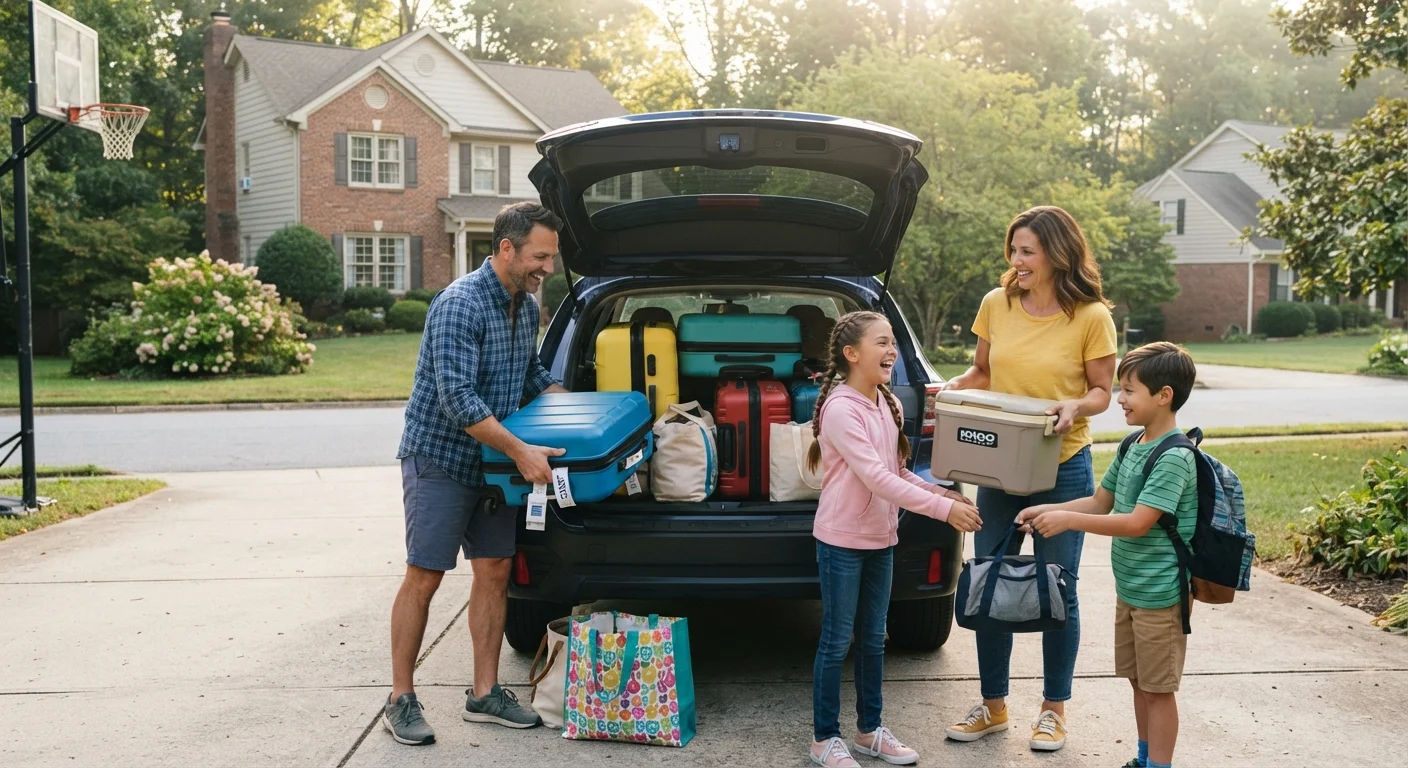
Photo: appropriateanswers.com editorial
—— In This Article
Key Takeaways
- Confirming reservations and refund policies before departure prevents costly last-minute surprises.
- Packing food and snacks from home is one of the highest-impact ways to cut per-day travel spending.
- Checking card and insurance coverage ahead of time avoids paying for protections you already have.
- A shared digital itinerary keeps the whole family on the same page and reduces on-trip spending decisions.
- Fuel, tolls, and parking costs are predictable when you plan routes before leaving home.
Why a pre-departure checklist changes the trip
Most family travel overspending does not happen at the destination. It happens in the 48 hours before departure, when a forgotten item sends someone to an airport pharmacy, or when a non-refundable booking turns out to have been misread. A checklist run the night before leaving closes those gaps before they become expenses.
This checklist covers five practical areas: bookings, budget and payment, food and supplies, packing, and route logistics. Working through all 22 items takes 45 to 90 minutes. That time is worth it. For a deeper look at where family travel dollars actually go, see the real cost of a US family road trip.
Notes or spreadsheet app
Track your daily budget caps, confirmation numbers, and packing lists in one place accessible to all family members.
Offline map app
Download destination maps before leaving so you can navigate without using mobile data or roaming.
Insulated cooler
Keep drinks, snacks, and prepared food cold throughout the drive to avoid costly roadside food stops.
Reusable water bottles
Eliminate per-day beverage costs at parks, attractions, and tourist areas.
Credit card benefits guide
Review your card's travel protections so you do not pay separately for coverage you already carry.
How to use this checklist
Go through each group in order. Items marked must are the ones that carry real financial or logistical risk if skipped. Items marked should are strongly worth doing for most families. Items marked nice to have add convenience without penalty if skipped.
Assign one adult to own each group, or split the list between two adults the evening before departure. Doing this as a conversation rather than a solo task catches things one person would miss. If you want to understand which habits quietly drain vacation funds even when you think you have planned carefully, common ways families overspend on vacation is worth reading before you start packing.
Bookings and reservations
Budget and payment
Food and supplies
Packing and gear
Route and logistics
A note on food prep as a budget tool
Food costs are the single most controllable line item in a family travel budget, and most families underuse that control. A cooler packed at home before departure can replace two or three paid meals per day on a driving trip. That adds up to a meaningful difference over a week.
The strategy is not about eliminating restaurant meals, which are part of the experience for most families. It is about replacing the incidental purchases: the gas station drinks, the vending machine snacks, the overpriced bottles of water at the theme park entrance. Those small costs accumulate faster than most families realize until they check their account balance mid-trip. Consistent habits that stretch a family travel budget covers this and other durable spending strategies in more depth.
Skipping the refund policy review costs families
Cancellation rules vary widely: some lodging and activity bookings become non-refundable 30 or more days before arrival. Read the fine print on every confirmation before you depart. If plans change and you have not checked the policy, you may have no recourse for a partial or full refund.
Do not rely on cell service alone for navigation
Rural routes, national parks, and coastal drives regularly have dead zones that can last for hours. Download offline maps for your full route before leaving home. A missed turn that sends you 20 miles off course adds fuel cost and stress neither benefits the trip budget.
Before you finalize any trip: check your existing coverage
Many families pay for travel insurance or rental car coverage they already have through a credit card. Before adding any insurance product at checkout, pull up your card's benefits summary and look specifically for travel accident coverage, trip interruption protection, and rental vehicle damage waiver language. The terms vary by card, so read the actual policy rather than relying on memory.
This is general guidance on what to look for. For questions about whether specific coverage applies to your situation, contact your card issuer directly. For broader money management principles that apply to travel planning, smart family finance resources covers foundational budgeting habits.
Prescription medications: pack extra
Always bring more prescription medication than the exact trip length requires, and keep it in carry-on luggage or an accessible bag rather than checked luggage. Filling a prescription in an unfamiliar state or at a tourist-area pharmacy can be significantly more expensive and is not always possible on short notice. Confirm with your prescriber before travel if you have any questions about supply.

Budget Travel Tips Editorial Team
Budget Travel Tips Editorial Team is the collective byline for our editorial team and contributor network. Articles published under this byline or an editorial pen name are researched, written, and reviewed according to our editorial standards for clarity, consistency, and independence before publication.
View author profile