
What 'R-Value' Really Means and Why It Matters Before You Buy Insulation
R-value is the single most important insulation metric, yet it confuses many homeowners. Here is a plain-language breakdown of how it works.
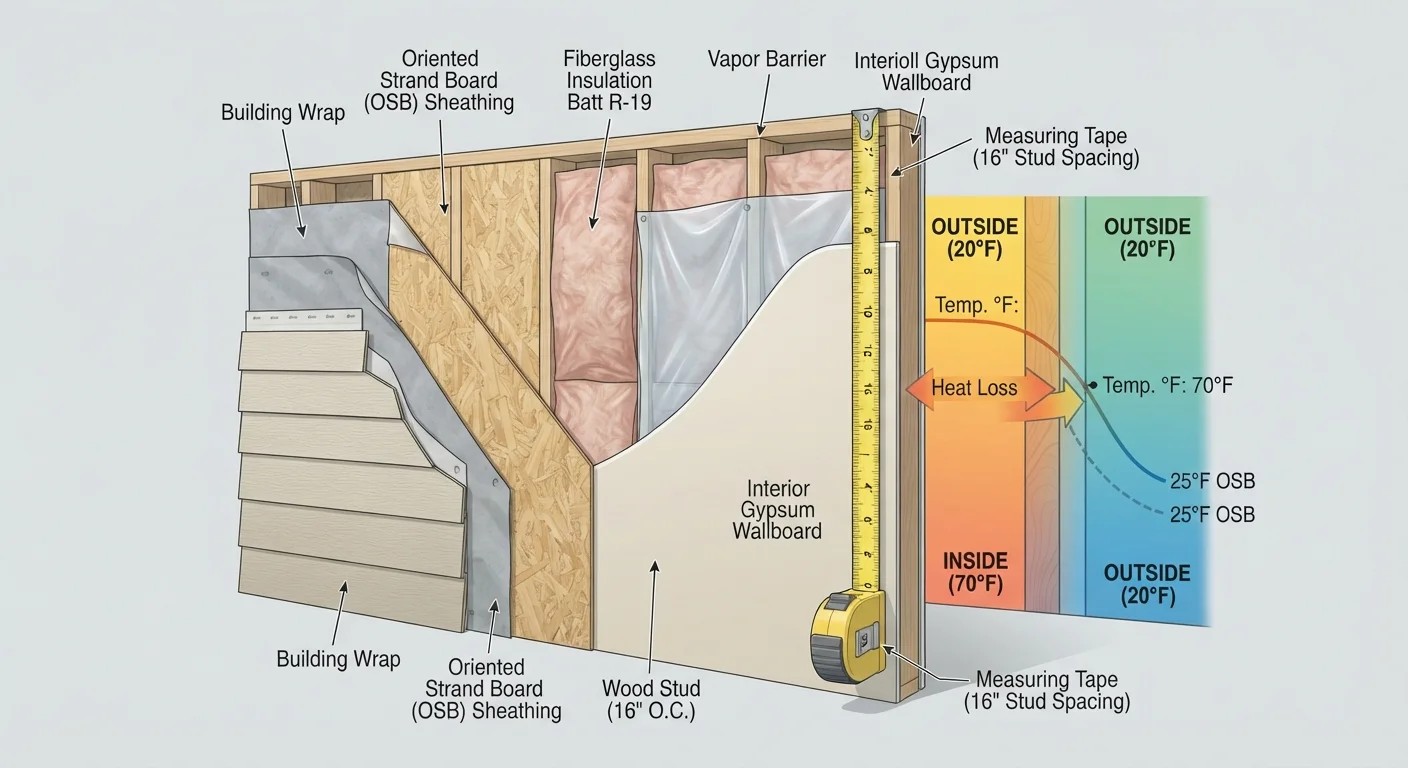
Photo: appropriateanswers.com editorial
—— In This Article
Key Takeaways
- R-value measures heat resistance: a higher number means better insulating performance.
- The right R-value for your home depends on your climate zone, not just the material's label.
- Stacking insulation layers adds R-values together, but real-world performance depends on proper installation.
- Air sealing and moisture control work alongside R-value to deliver actual energy savings.
- Comparing insulation types by cost-per-R is a practical way to evaluate value without overspending.
What R-value actually measures
R-value stands for thermal resistance. It tells you how strongly a material opposes the movement of heat through it. When your home is warm in winter and cold air presses against the walls, heat tries to move outward. Insulation slows that transfer. R-value is the unit that quantifies how well it does that job.
The number itself comes from a standardized laboratory test. A sample of material is placed between two temperature-controlled plates, and the equipment measures how much heat passes through per unit of area over time. A material rated R-19 resists heat flow roughly twice as well as one rated R-10 of the same thickness.
One point worth understanding: R-value is measured per inch for most loose or batt materials. Manufacturers often list both the per-inch figure and the total R-value for a specific product thickness. Comparing per-inch ratings is the most direct way to see which material delivers more resistance for the same space.
Check the label for both values
When shopping for insulation, look for both the total R-value of the product and the R-value per inch. Some products appear similar at a glance but deliver very different performance at the same installed thickness. A thinner product with a higher per-inch rating may outperform a thicker, lower-density alternative in tight wall cavities.
Why your climate zone changes everything
A single R-value target does not apply to every home in the country. The US Department of Energy divides the country into climate zones numbered 1 through 8, ranging from hot-humid regions in Florida to extreme cold zones in Alaska. Each zone has a recommended R-value range for attics, walls, floors, and foundation areas.
A home in Phoenix, Arizona needs insulation that manages summer heat gain more than winter heat loss. A home in Minneapolis needs to stop heat from escaping through walls and the attic during long, cold winters. The recommended attic R-value in a warm southern climate might be R-38, while the same space in a northern climate calls for R-60.
Before purchasing any insulation, find your climate zone using the DOE's publicly available map, then compare that zone's recommendation against your existing insulation level. Many older homes, particularly those built before 1980, fall far short of current recommendations.
90%
US homes with insufficient insulation levels
The North American Insulation Manufacturers Association has cited figures suggesting the large majority of existing US homes are under-insulated relative to current energy code recommendations.
15%
Typical heating and cooling savings from air sealing and insulation
The US Department of Energy estimates that homeowners can reduce heating and cooling costs by around 15% by sealing air leaks and adding insulation, though results vary by home and climate.
R-49 to R-60
Recommended attic R-value for cold northern climates
The DOE's Insulation Fact Sheet provides zone-specific recommendations; colder zones 6, 7, and 8 call for attic insulation in this range for uninsulated or under-insulated attics.
How installation affects real-world performance
The R-value printed on a package assumes perfect installation. Gaps, compression, and moisture all reduce what insulation actually delivers in a finished wall or attic.
Fiberglass batts that are stuffed into a cavity too narrow for their width get compressed. Compression reduces the air pockets that create thermal resistance, so a compressed R-15 batt may perform closer to R-11. The same happens when batts are cut sloppily around electrical boxes or pipes, leaving uncovered gaps that allow heat to move freely.
Air movement is a separate problem. R-value measures conductive heat resistance, not convective heat transfer through air. A wall with excellent R-value but poor air sealing can still lose significant heat through drafts. This is why building professionals treat air sealing and insulation as two distinct tasks, both of which are necessary to reach the intended performance level.
Moisture is the third factor. Wet insulation conducts heat far more readily than dry insulation. Fiberglass and mineral wool lose meaningful performance when damp; cellulose can hold moisture and take time to dry out. Vapor barriers and proper ventilation protect R-value over time.
Comparing insulation types by R-value and cost
Different insulation materials reach the same R-value targets at different costs and with different installation requirements. Fiberglass batts are widely available and relatively inexpensive per square foot. Mineral wool batts carry a higher price but resist moisture and fire better. Blown-in cellulose can fill irregular spaces well and is often cost-competitive for attic work. Spray polyurethane foam delivers the highest R-value per inch and doubles as an air barrier, but professional installation adds significant labor cost.
A practical comparison method is cost-per-R-value-per-square-foot. Divide the installed cost of a product by its R-value to see what each unit of thermal resistance costs you. This approach strips out marketing differences and lets you evaluate materials on performance and price together.
Local contractor quotes and material costs vary by region, so gather at least two or three estimates before committing to a large insulation project. For accessible attic spaces, blown-in installation is often available as a low-cost service through utility rebate programs, which can change the math considerably.
Frequently Asked Questions

Home On A Budget Editorial Team
Home on a Budget Editorial Team is the collective byline for our editorial team and contributor network. Articles published under this byline or an editorial pen name are researched, written, and reviewed according to our editorial standards for clarity, consistency, and independence before publication.
View author profile