
Grout vs. Caulk in a Tile Repair: Choosing the Right Material for the Right Joint
Using grout where caulk belongs, or vice versa, leads to cracking and water damage. Learn the difference before tackling a DIY tile fix.
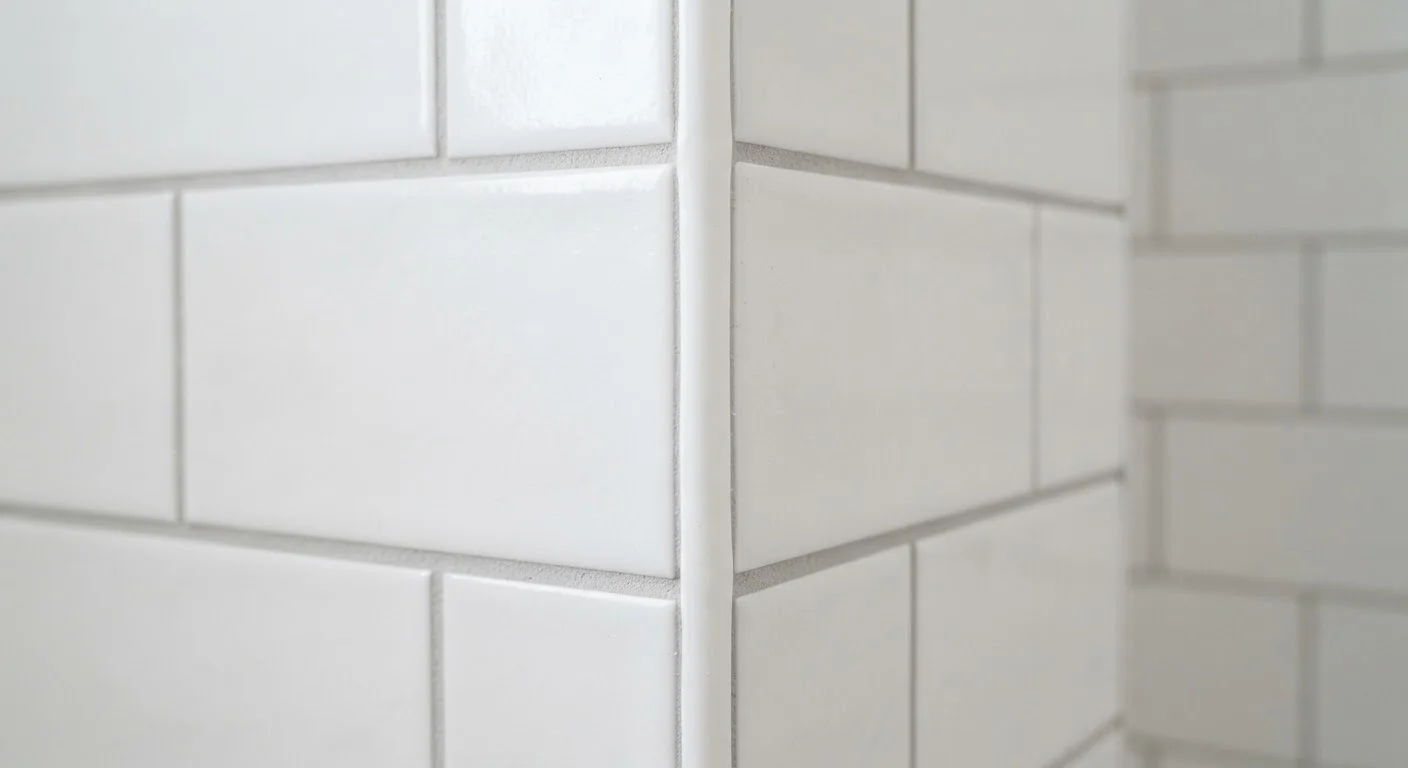
Photo: appropriateanswers.com editorial
—— In This Article
Key Takeaways
- Grout belongs in field joints between tiles on flat, stable surfaces; caulk belongs at corners and plane changes.
- Using grout in a change-of-plane joint almost always results in cracking because the two surfaces move independently.
- Silicone caulk resists moisture better than latex caulk, making it the standard choice for wet areas like showers.
- The Tile Council of North America specifies caulk at all interior and exterior corners where walls meet floors.
- Grout and caulk can be color-matched so the transition between them is nearly invisible when done carefully.
Why the distinction matters
A cracked tile joint is rarely just cosmetic. Water that works through a failed joint can reach the substrate, cause mold behind the wall, or rot the subfloor beneath a bathroom tile. Most of those failures trace back to one mistake: using grout in a location that required caulk, or vice versa.
Grout is a cement-based (or epoxy-based) filler designed to bond the edges of tiles together on a flat, stable plane. It is hard and compressive. Caulk is a flexible elastomeric sealant designed to accommodate movement between two surfaces. The difference is not a matter of preference; it follows the geometry of the joint.
| Criterion | Grout | Caulk |
|---|---|---|
| Material type | Cement-based or epoxy | Silicone or latex elastomer |
| Flexibility | Rigid, no flex | Flexible, absorbs movement |
| Correct joint location | Between tiles on a flat plane | Corners, plane changes, fixture perimeters |
| Water resistance (shower) | Good when sealed | Excellent (silicone) |
| Typical lifespan in wet area | 10+ years on stable substrate | 5-15 years depending on product |
| DIY difficulty | Moderate (mixing, timing) | Low to moderate |
| Paintable | Yes (after cure) | Latex yes, silicone no |
If a joint sits in a single plane, grout is almost always correct. If a joint sits at a corner, a transition, or anywhere adjacent to a fixed object, caulk is almost always correct. Understanding that rule first makes every repair decision straightforward.
Where grout belongs
Grout fills the gaps between tiles on floors, walls, and countertops where both tiles sit on the same flat surface and the substrate beneath them does not flex. Those joints carry compressive load from foot traffic and need a hard, wear-resistant fill.
Sanded grout suits joints wider than 1/8 inch. Unsanded grout suits joints narrower than 1/8 inch, including most wall tile work where wider gaps would look out of place. Epoxy grout is a third category: harder, stain-resistant, and much more difficult to work with, so it is generally reserved for commercial settings or countertops that need heavy chemical resistance.
When re-grouting a damaged area, clean out the old grout with a grout saw or oscillating multi-tool to a depth of at least 1/4 inch before applying fresh material. Shallow patches bond poorly and tend to pop out within months.
Where caulk belongs
Any joint that crosses a change of plane needs caulk. The most common examples in a home are the corner where a shower wall meets the floor or tub deck, the joint where a tiled floor meets a baseboard, and the perimeter of any built-in shelf or niche inside a shower.
The Tile Council of North America (TCNA) Handbook, the industry reference for tile installation, specifies that interior and exterior corners, changes of plane, and joints adjacent to restraining surfaces should be filled with an elastomeric sealant rather than grout. That is not an opinion; it reflects decades of documented failure analysis.
For wet areas, silicone caulk outlasts latex (also called acrylic) caulk by a wide margin. Latex caulk is easier to apply and tool, and it accepts paint, but it degrades faster in a shower environment. 100% silicone holds up longer but requires a clean, dry surface to adhere properly and cannot be painted.
Color-matched caulk is widely available. Many grout manufacturers sell a matching caulk in the same color line, so the transition at a corner looks intentional rather than patched.
Common mistakes and how to avoid them
The most frequent error is filling a tub or shower corner with grout because it looks like the surrounding field joints. That corner joint will crack within one to three years as the tub flexes under weight and the wall substrate moves seasonally. The fix is to remove the grout completely with a utility knife or oscillating tool and replace it with caulk.
The second common error is applying caulk over existing grout without removing the grout first. Caulk applied over a hard, incompatible surface will not bond correctly and will peel away quickly, sometimes taking the grout with it.
Check for mold before you re-seal
If the old joint shows black or pink discoloration, clean the area with a diluted bleach solution and let it dry fully before applying new caulk. Sealing over active mold traps moisture and the problem continues underneath. If mold has penetrated the substrate or backer board, the tile section may need to be removed and the substrate replaced before any surface repair will hold.
A third mistake is skipping surface prep before caulking. Silicone will not adhere to a damp surface or to soap scum. Clean the joint with rubbing alcohol, let it dry completely (at least 24 hours after any water contact), and then apply the caulk for a bond that lasts.

Home On A Budget Editorial Team
Home on a Budget Editorial Team is the collective byline for our editorial team and contributor network. Articles published under this byline or an editorial pen name are researched, written, and reviewed according to our editorial standards for clarity, consistency, and independence before publication.
View author profile