
Generic vs. Brand-Name Medications: What Families Should Understand Before Filling a Prescription
Generic drugs contain the same active ingredients as brand-name versions. Learn what the differences actually mean for safety, cost, and everyday family health.
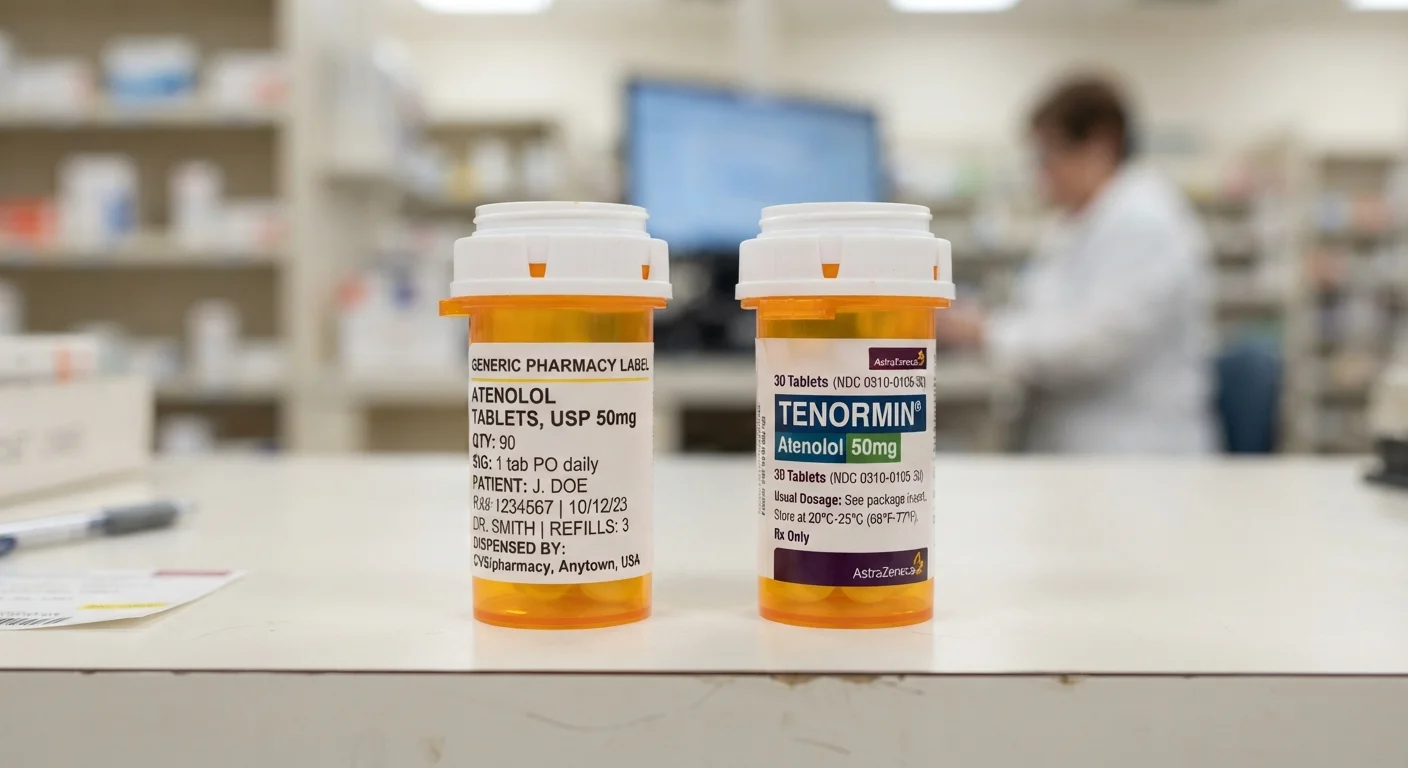
Photo: appropriateanswers.com editorial
—— In This Article
Key Takeaways
- Generic medications contain the same active ingredient, strength, and dosage form as their brand-name counterparts.
- The FDA requires generics to demonstrate bioequivalence before they can be approved and sold.
- Inactive ingredients can differ between generic and brand-name versions, which matters for people with certain allergies or sensitivities.
- Generic drugs typically cost significantly less, which can add up to meaningful savings for families on regular prescriptions.
- A pharmacist or prescribing doctor can help determine whether a generic is appropriate for a specific patient.
What makes a generic drug "generic"
A generic medication is a drug that contains the same active ingredient, in the same amount, in the same dosage form (tablet, capsule, liquid), and administered by the same route as the original brand-name product. In the United States, the Food and Drug Administration (FDA) requires generic manufacturers to demonstrate bioequivalence, meaning the generic delivers the active ingredient into the bloodstream at a rate and concentration that falls within an accepted range of the brand-name version.
The key difference is not what the drug does in your body. It is who makes it and at what price. Generic manufacturers can enter the market after a brand-name drug's patent expires, which typically happens years after the original product launched. Because they do not carry the cost of original clinical trials and drug discovery, generics are priced much lower.
Inactive ingredients, sometimes called excipients, include binders, fillers, dyes, and coatings. These can differ between a generic and a brand-name product. For the vast majority of people, that difference has no practical effect. For individuals with specific allergies or intolerances to certain dyes or fillers, it can matter, and a pharmacist can help identify which products contain which inactive ingredients.
How the FDA regulates generic approval
The FDA's Office of Generic Drugs reviews applications before any generic can reach pharmacy shelves. Manufacturers must show that their product is pharmaceutically equivalent and bioequivalent to the reference listed drug. They must also demonstrate that their manufacturing facility meets the same quality standards as brand-name producers.
| Criterion | Generic medications | Brand-name medications |
|---|---|---|
| Active ingredient | Identical to brand-name | Original formulation |
| FDA approval required | Yes, via bioequivalence review | Yes, via full clinical trials |
| Inactive ingredients | May differ by manufacturer | Fixed formulation |
| Typical cost | Significantly lower | Higher due to R&D costs |
| Insurance copay tier | Usually lowest tier | Usually higher tier |
| Availability | After patent expiry | From launch date |
| Appearance | May look different | Consistent appearance |
An FDA bioequivalence standard allows the generic's absorption rate and concentration to fall within 80 to 125 percent of the brand-name version. In practice, the actual measured difference is typically much smaller, often within a few percent. The allowable range exists to account for normal biological variability between people and between batches, not to permit meaningfully weaker or stronger products.
This regulatory framework applies to standard drugs. Biological medications, called biologics, follow a different and more complex pathway. Biosimilars (the biologic equivalent of generics) must meet a higher standard of similarity and go through a separate approval process. Families managing conditions treated with biologics should consult their prescriber about whether a biosimilar is appropriate for their specific case.
The real cost difference for families
Cost is where generics have a clear and direct impact on family budgets. According to the FDA, generic drugs save consumers and the health care system tens of billions of dollars annually. For a family filling multiple prescriptions each month, the per-prescription difference between a generic and a brand-name drug can range from a few dollars to well over one hundred dollars, depending on the medication.
90%
Share of U.S. prescriptions filled as generics
According to the FDA, generic drugs account for approximately 90 percent of prescriptions dispensed in the United States.
$313B
Estimated annual savings from generic drug use
The Association for Accessible Medicines has reported that generic and biosimilar medicines save the U.S. health care system hundreds of billions of dollars each year.
80-85%
Typical cost reduction vs. brand-name price
The FDA notes that generic drugs commonly cost 80 to 85 percent less than the brand-name equivalent when multiple generics are competing in the market.
Most insurance plans, including Medicaid and Medicare Part D, apply lower copayments to generic drugs than to brand-name equivalents. Some pharmacy programs offer certain generic medications at very low fixed prices for a 30- or 90-day supply. Asking your pharmacist about generic availability at the point of filling a prescription is one of the simplest steps a family can take to reduce health care spending.
Families should also be aware that some brand-name manufacturers offer patient assistance or coupon programs that can reduce the cost of brand drugs in specific situations. Whether those options produce lower out-of-pocket costs than the generic depends on the specific drug, insurance plan, and program terms. A pharmacist or insurance representative can help compare actual costs.
This article is for general informational purposes only and is not medical or financial advice. Always consult a qualified health care professional before making changes to any medication regimen.

Family Health Savings Editorial Team
Family Health Savings Editorial Team is the collective byline for our editorial team and contributor network. Articles published under this byline or an editorial pen name are researched, written, and reviewed according to our editorial standards for clarity, consistency, and independence before publication.
View author profile